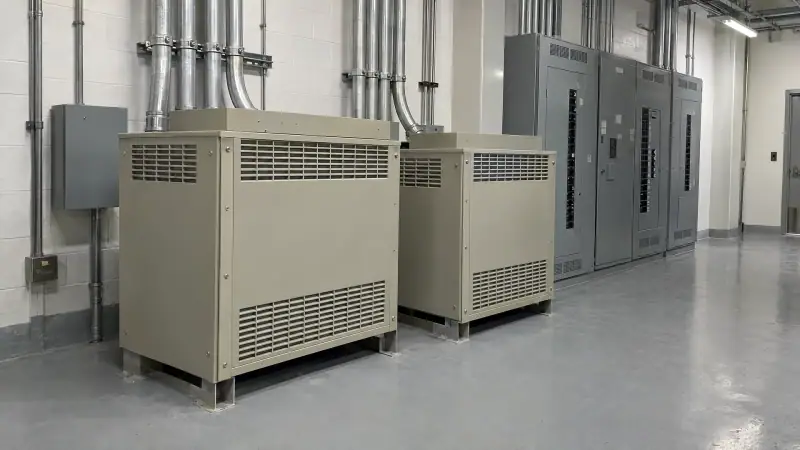
Cast Coil Transformer Buyers for New York Facilities
We buy cast-resin transformers from contractors, facility managers, utilities, developers and property owners. These units serve building distribution systems, transit facilities and industrial plants where an oil-free transformer is useful. We consider one unit or a group removed during a service upgrade, equipment replacement or facility closure.
Epoxy encapsulation helps protect the cast windings against moisture and contamination. Cast resin is not waterproof, and water intrusion, conductive dust or poor ventilation still matters when we evaluate a unit. Unlike an oil-filled transformer, a cast-coil unit has no insulating-liquid reservoir that can leak or feed a liquid-fuel fire; it still needs proper clearances, ventilation and protection.
For sellers in New York City buildings and facilities, we need to know whether the transformer is in a basement electrical room, on an upper floor or already outside. Building access often determines the removal plan. If the construction is unclear, our dry-type transformer buying page covers the broader category; send coil photos so we can identify what you have.
Brands, Cast-Winding Construction and Resale Fit
We review cast-coil transformers from manufacturers such as Schneider Electric, Siemens, ABB and Eaton. The nameplate and winding construction matter more than the logo alone. A dry-type transformer with exposed or varnish-treated windings is different from a transformer with epoxy-encapsulated coils, so we ask for both nameplate and interior photos.
Include the model, serial number and manufacturing date when they are legible. Manufacturer drawings or a specification sheet can help establish whether both windings are cast or the unit uses a different secondary-winding construction. Our transformer brands we buy page gives broader manufacturer coverage, and our Square D and Schneider Electric transformer page addresses equipment carrying those names.
Cast-resin units can have strong resale potential when their ratings fit another installation and their insulation condition is documented. We also consider discontinued models and units with missing accessories, but tell us what is absent. A missing fan assembly, temperature controller or enclosure panel changes what a buyer will need to restore before the unit can return to service.
Nameplate Details That Help Us Evaluate Your Unit
To sell a cast coil transformer, start with a clear, straight-on nameplate photo. We need the kVA rating, primary and secondary voltages, phase, frequency, impedance and tap information. Connection diagrams, insulation ratings and cooling designations help us compare the unit with potential replacement applications.
Our guide to reading a transformer nameplate explains where to find these details. If the plate lists separate self-cooled and fan-assisted ratings, send both and tell us whether the fans and controls are present. Do not describe the higher rating as the base rating without identifying the cooling arrangement.
Useful supporting information includes:
- Overall enclosure dimensions and listed weight, if available.
- Photos of primary and secondary terminals, tap links and cable connections.
- Temperature monitor, sensors, fans and control wiring.
- Indoor or outdoor enclosure designation and current storage conditions.
- Available drawings, manuals and electrical test reports.
We evaluate ratings individually, including units discussed on our 1,000 kVA transformer page and 2,500 kVA transformer page. Use the actual nameplate rather than estimating capacity from the enclosure size.
Cracks, Tracking and Partial Discharge Records
With the transformer safely isolated, useful photos show accessible coil surfaces, winding ends, supports and terminals. We look for visible cracks, chips, discoloration, carbonized tracks, contamination and signs of overheating. Send close-ups plus wider views so we can locate each defect; do not touch or probe damaged resin to make a diagnosis.
A photograph cannot establish insulation integrity or rule out partial discharge. Partial discharge is localized electrical activity within or along insulation, and it may require specialized testing to identify. If testing has been performed, send the report, test method, date and recorded findings rather than only a statement that the transformer passed.
We also review insulation-resistance, winding-resistance, ratio and other available test records. Tell us about trips, unusual noise, temperature alarms, flooding or a known electrical fault. No single test result establishes the complete condition of a cast-resin transformer.
Electrical access and testing should be handled by qualified personnel using appropriate isolation procedures. We do not ask sellers to energize equipment, remove guards from live equipment or perform partial-discharge testing themselves; existing records and safely obtained photos are enough to begin our review.
Offers for Surplus, Used and Failed Cast-Resin Units
We buy new-in-crate cast-coil transformers, operating units being replaced, decommissioned equipment and damaged units. For unused inventory, send photos of the crate, packaging, nameplate and any visible storage damage. Include the original specification documents if you have them, especially when the transformer was built for a canceled project.
For used equipment, tell us when it last operated, why it was removed and how it has been stored since removal. Maintenance records and clear condition photos help us assess reuse potential. Our used transformer buying process also applies to cast-resin equipment coming out of active service.
Resale depends on more than kVA. Voltage combination, winding connection, impedance, enclosure dimensions, cooling equipment and insulation condition all affect suitability for another installation. A complete unit with useful ratings and documented condition generally gives us more options than an incomplete unit with an unexplained fault.
Failed cast coils are often difficult to repair because the winding is encapsulated. We still review units with cracked resin, burned windings or other damage for parts or scrap value. Describe the failure plainly so our written offer reflects the equipment we will inspect at pickup.
Pickup Planning for Heavy and Restricted-Access Units
Call or text 951-403-5738, or request an offer for your cast-coil transformer with photos and basic details. After reviewing the ratings, condition and available records, we provide a written offer. We buy one transformer or an entire yard, and we coordinate pickup anywhere in New York State rather than accepting deliveries at a public New York drop-off yard.
For an indoor unit, send photos of the route from the electrical room to the loading point. Door widths, stairs, freight elevators, floor transitions and overhead obstructions affect rigging. Tell us whether the enclosure remains assembled and whether the transformer is still connected to cables or adjacent switchgear.
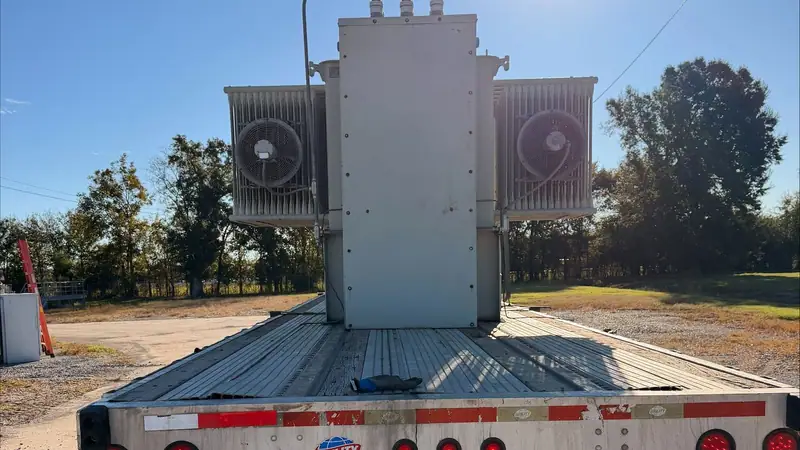
We coordinate rigging, forklift or crane requirements and flatbed, step-deck or lowboy trucking as needed. Use the nameplate, manufacturer drawing or reliable shipping record for weight; an enclosure’s appearance is not a safe basis for selecting lifting equipment. You can also load the transformer if you prefer and suitable equipment is available.
Our offer and pickup process includes a quick inspection at pickup to confirm the unit matches the photos. Payment is by check, ACH or wire under the agreed terms.
Questions sellers ask about Cast Coil Transformers
Who buys used cast coil transformers in New York?
We buy used cast-coil transformers anywhere in New York State, including units removed from buildings, transit facilities and industrial plants. Send nameplate photos, coil and enclosure pictures, the location and the reason for removal. We review the equipment, provide a written offer and coordinate pickup under the agreed terms.
Can I sell a cast resin transformer with cracked coils?
Yes, we review cast-resin transformers with cracked coils, burned windings and other damage. Send close-up photos and describe any known fault or test findings. Cracking affects reuse potential, and some damaged units are better suited to parts or scrap evaluation. We base our offer on the documented condition.
Do I need a partial discharge test to sell my transformer?
We can begin our review without a partial-discharge test. Send any existing reports, along with the nameplate, condition photos and operating history. Photos cannot rule out internal insulation defects. If additional testing is needed for a reuse evaluation, we discuss that before proceeding rather than asking you to test it yourself.
Are cast coil transformers the same as dry-type transformers?
Cast-coil transformers are a type of dry-type transformer that uses epoxy resin to encapsulate cast windings. Other dry-type designs use different insulation systems, including varnish-treated windings. We buy both categories, but need photos and nameplate details to identify the construction and evaluate the correct equipment.
Can I sell a transformer located in my building?
We can evaluate a building transformer if you own it or are authorized to sell it. Utility-owned transformers belong to the utility and are not for sale by property owners. Send ownership information, equipment photos and access details so we can review the unit and plan pickup.