Transformer Buyers in the Capital Region: Where We Buy
We buy seller-owned transformers throughout the Capital Region, from government and commercial properties around Albany to industrial facilities in Schenectady and the growing development corridor through Saratoga County. Equipment may be new surplus left after a project, a working unit removed during an upgrade, or a failed transformer awaiting removal. Tell us what you have and where it sits so we can evaluate both the equipment and the pickup.
Our coverage includes Albany transformer sellers, Cohoes, Colonie, Rensselaer, Watervliet and Hudson. We also coordinate purchases in Schenectady, Troy, Mechanicville and Clifton Park, along with Saratoga Springs, Malta and Glens Falls.
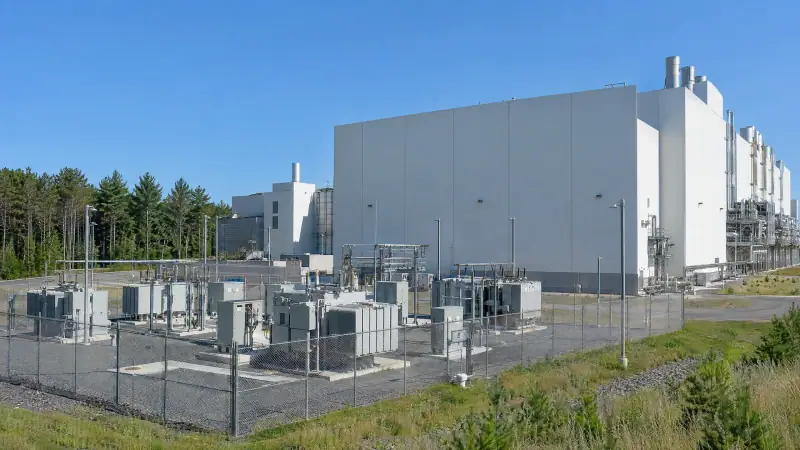
The regional market reflects several distinct settings: state government campuses, older industrial properties associated with Schenectady’s GE heritage, and semiconductor-related development around GlobalFoundries Fab 8 in Malta. These landmarks help explain the area’s electrical infrastructure; we do not claim affiliation with GE, GlobalFoundries or any government agency.
Cities and towns we serve in Capital Region
Cities
- Albany, NYCity · Albany County
- Cohoes, NYCity · Albany County
- Glens Falls, NYCity · Warren County
- Hudson, NYCity · Columbia County
- Mechanicville, NYCity · Saratoga County
- Rensselaer, NYCity · Rensselaer County
- Saratoga Springs, NYCity · Saratoga County
- Schenectady, NYCity · Schenectady County
- Troy, NYCity · Rensselaer County
- Watervliet, NYCity · Albany County
Towns, villages and hamlets
- Colonie, NYTown · Albany County
- Clifton Park, NYTown · Saratoga County
- Malta, NYTown · Saratoga County
Units We Review From Campuses, Plants and Development Sites
For commercial properties and development projects, we review single-phase and three-phase padmount transformers, including unused units still in their crates. Our padmount transformer buying page explains the equipment details we need. Send the high- and low-voltage ratings rather than describing a unit only as a building or utility transformer.
Industrial and institutional sites may have dry-type transformers inside electrical rooms or oil-filled substation and unit-substation equipment serving larger loads. We review those units individually, including removed-from-service equipment and transformers with known faults. For projects around Malta, we can also review surplus equipment purchased for construction or facility expansion, provided the seller owns it and has authority to sell.
Our buying range is roughly 15 kVA through 20+ MVA, depending on the unit. Useful details include:
- Transformer type, manufacturer and serial number.
- kVA or MVA rating and primary and secondary voltages.
- New surplus, operational, disconnected, failed or scrap condition.
- Fluid type for liquid-filled equipment and available PCB information.
- Included radiators, bushings, cabinets and other transformer components.
What we buy in Capital Region
New surplus, used, decommissioned and failed units, from about 15 kVA to 20 MVA and up. One transformer or a whole yard.
What to Send for a Capital Region Transformer Offer
To sell a transformer in the Capital Region, start with clear photos of the complete unit and every readable nameplate. Include the pickup town, quantity, current condition and whether the transformer is still connected. Call or text 951-403-5738, or use our transformer offer form to submit the details.
Photograph all accessible sides, connection compartments that are already safely open, and any visible leaks, cracked bushings, corrosion or missing parts. For new-in-crate equipment, show the packaging labels and any available factory paperwork. Do not open energized compartments to take photos.
We review the type, rating, voltages, age, condition, fluid and PCB status, plus test data when available. Recent test reports can help us understand a used unit, but send the information you have even if the records are incomplete.
Also tell us whether the equipment is at ground level, inside a building, in a vault or behind a restricted-access gate. Those details let us address removal and transportation requirements in the written offer rather than leaving the pickup arrangements unclear.
Pickup Planning Along I-87, I-90 and I-88
The Capital Region’s I-87, I-90 and I-88 connections help frame trucking routes, but the final approach to the transformer matters just as much. We need to know about narrow entrances, low overhead clearance, soft ground, loading docks and limits on where a truck can stage. At an occupied campus or operating plant, include any delivery windows or site-access procedures.
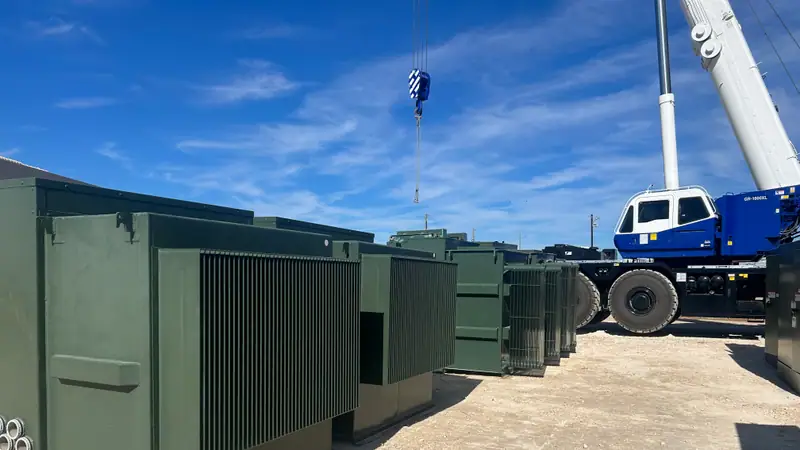
We coordinate rigging, forklift or crane support, and flatbed, step-deck or lowboy trucking as needed for the agreed pickup. If your crew prefers to load the transformer, we can plan around that arrangement. Our transformer loading and shipping guide covers the information that helps prepare a load.
For larger units, send the nameplate or drawing weight and overall dimensions, including radiators or other attached components. We rely on equipment records and confirmed dimensions when planning transportation, not a weight estimate based only on kVA.
For equipment near the Port of Albany, describe the actual storage location and loading access; proximity to the port does not tell us how a unit can be collected. We have no public storefront or drop-off yard in New York—we come to the seller.
From Written Offer to Inspection and Payment
Once we have the equipment details, we review the transformer and provide a written offer. We address the unit or lot being purchased, the pickup arrangement and payment terms before scheduling collection. If several transformers are involved, label the photos by unit so nameplates and condition pictures stay matched.
After you accept the offer, we coordinate the agreed loading equipment and transportation. Tell us who will be our site contact and who controls access to the equipment. For a campus replacement or industrial shutdown, distinguish the date the transformer becomes available from the date your contractor expects to finish disconnecting it.
At pickup, we perform a quick inspection to confirm that the transformer matches the photos and description. Payment is by check, ACH or wire under the agreed terms. Our buying process explains the sequence from the initial equipment review through collection.
Report changes before the truck is scheduled, including newly discovered damage, removed components or a different pickup location. Accurate updates help keep the written offer and loading plan aligned with the equipment we will collect.
Ownership, Failed Units and Fluid Records
Before offering a transformer for sale, confirm that you own it or are authorized to sell it. A utility-owned transformer on private property belongs to the utility and is not available for a property owner to sell. On government campuses or managed facilities, confirm the applicable asset-disposal approval before committing to a sale.
We review damaged, failed and scrap transformers as well as serviceable equipment. Describe the failure if known, identify missing components and send photos of leaks or physical damage. Do not drain fluid or dismantle a unit just to prepare it for an offer; tell us its present condition first.
For liquid-filled transformers, send the fluid label and any available PCB test records. Mineral oil, FR3 or other natural ester, and silicone are useful distinctions, but a fluid description is not a substitute for PCB documentation. Handling and disposal requirements depend on the equipment and its contents; confirm current EPA and New York requirements with qualified personnel.
Have qualified electrical personnel disconnect and make the equipment safe before removal. We coordinate purchasing and pickup around the agreed site readiness and loading conditions.
Questions sellers ask about Capital Region
Who buys used transformers in the Capital Region?
We buy used electrical transformers across the Capital Region, including Albany, Schenectady, Troy, Saratoga Springs and Glens Falls. We review padmount, dry-type and substation units, along with damaged and scrap equipment. Send nameplate photos, condition details and the pickup town so we can evaluate the transformer and provide a written offer.
Can I sell a transformer that is still connected at my facility?
You can send details for our review while the transformer is still connected. Tell us when it will be released from service and who will handle disconnection. Qualified electrical personnel must make it safe before removal. We schedule pickup around the agreed readiness date, site access and loading arrangements.
Do you pick up transformers in Malta and Clifton Park?
Yes. We coordinate pickup in Malta, Clifton Park and nearby Capital Region communities. Send the equipment location, photos, dimensions and available weight information, along with access restrictions. We can coordinate rigging and trucking or arrange for your crew to load, depending on the terms agreed for the purchase.
Can I sell a failed oil-filled transformer without test records?
Send the nameplate, fluid label, photos and a description of the failure even if test records are missing. We review failed oil-filled transformers, but need to understand their condition and available PCB information before agreeing to a purchase and pickup. Tell us about leaks, missing parts and any fluid sampling already completed.