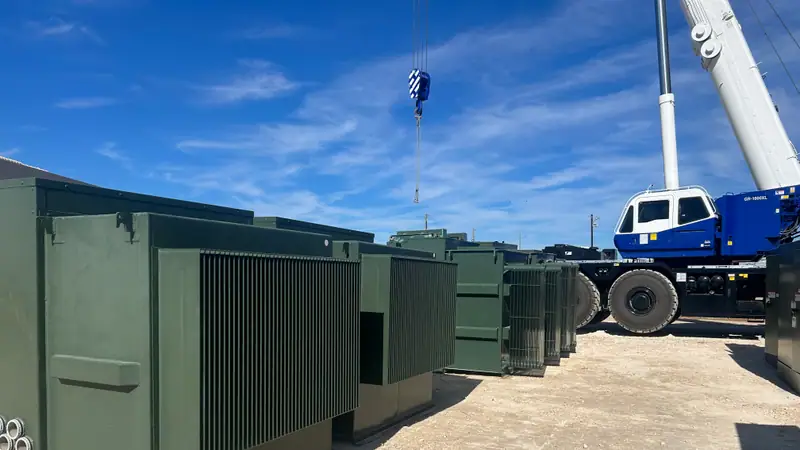
1000 kVA padmount and substation units we buy
A 1000 kVA transformer is rated at 1 MVA and commonly serves a substantial commercial or industrial load. In New York, equipment at this size supplies manufacturing buildings, warehouses, larger commercial properties and institutional facilities. It may become surplus after a service expansion, building redevelopment, equipment replacement or closure.
We review three-phase 1000 kVA padmount transformers with enclosed cable compartments, along with substation transformers connected to adjacent switchgear or other distribution equipment. We also buy dry-type units at this rating. Tell us which form you have rather than identifying it only by its capacity.
For padmount units, photograph the enclosure, doors, bushings and accessible connection compartments. For substation equipment, show the transformer separately from the adjoining equipment and identify which components are included in the sale. Clear photos help us understand what must be disconnected and handled at pickup.
Confirm ownership before offering the unit. A utility-owned transformer belongs to the utility, even when it sits on your property, and is not yours to sell.
Full-load amps for a 1000 kVA transformer
| Voltage (line-to-line) | Full-load current |
|---|---|
| 208 V | 2,775.7 A |
| 480 V | 1,202.8 A |
| 600 V | 962.3 A |
| 4,160 V | 138.8 A |
| 12,470 V | 46.3 A |
| 13,200 V | 43.7 A |
| 13,800 V | 41.8 A |
| 34,500 V | 16.7 A |
Calculated as kVA × 1,000 ÷ (1.732 × V) for a three-phase unit. Check the nameplate for the actual ratings. Use the kVA to amps calculator.
Nameplate voltages and 1000 kVA transformer full load amps
Common primary ratings include 12,470 V, 13,200 V and 13,800 V. Common secondary arrangements include 480Y/277 V and 208Y/120 V; we also review 600 V units. Send the exact primary and secondary ratings, connection diagram and tap information from the nameplate. A familiar enclosure does not identify the voltage or winding arrangement.
The template's full-load amps table shows calculated three-phase current at several voltages. For a 1000 kVA transformer, the values include 2775.7 A at 208 V, 1202.8 A at 480 V and 46.3 A at 12470 V. These calculations use the rated apparent power and line-to-line voltage; they are not instructions for selecting cables, breakers or protective settings.
Our kVA to amps calculator explains the relationship between capacity, voltage and current. For buying purposes, we still need a readable nameplate rather than a current estimate from the building load.
Also show whether the rating is self-cooled or includes an additional fan-assisted rating. If more than one kVA rating appears, include the complete plate so we can review the cooling designation and equipment configuration.
Approximate weight and oil volume for pickup planning
The weight of a 1000 kVA transformer depends on its construction, voltage class, enclosure and cooling system. As a broad planning range, many oil-filled padmount and substation units weigh approximately 6,000–14,000 pounds with fluid. Some designs fall outside that range. Check the nameplate for the actual weight before selecting lifting equipment or a truck.
Oil volume also varies by design. An approximate planning range for many oil-filled units at this size is 250–600 gallons, but the manufacturer's nameplate or documentation should control. Tell us whether the unit is full, partially drained or empty, and identify the fluid as mineral oil, FR3/natural ester, silicone or unknown.
Our transformer weight guide provides background for planning, not a substitute for the unit's own lifting and weight information. Dry-type equipment has different handling considerations, including enclosure dimensions and protection of exposed coils.
Send any available fluid records and PCB documentation. If PCB status is unknown or a leak is present, disclose it before scheduling; handling and transport requirements should be confirmed under current applicable rules.
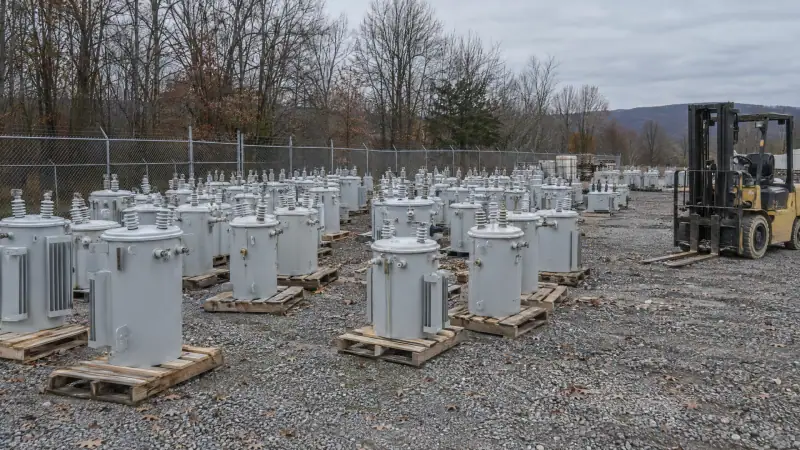
What affects the resale value of a used 1000 kVA transformer
We evaluate a used 1000 kVA transformer by its electrical configuration, condition and potential for reuse. Capacity alone is not enough to establish an offer. The exact voltage combination, winding connections, impedance, age, manufacturer and available records help us assess the unit.
The most useful details are:
- Operating history: when it was last energized, why it was removed and any known faults.
- Physical condition: leaks, corrosion, damaged bushings, missing doors or damaged coils.
- Completeness: installed accessories, intact compartments and any parts removed during disconnection.
- Test records: available insulation, winding or oil test results, with their dates.
- Storage condition: indoor or outdoor storage, weather exposure and protection of openings.
New surplus equipment should include crate photos and any factory paperwork still with it. For removed-from-service equipment, tell us if it was operating normally before removal. For failed equipment, describe the failure rather than calling it simply used.
Our guide to what a used transformer is worth explains these factors in more detail. We review reusable and scrap units, but a damaged transformer may need a different evaluation from an intact unit with useful records.
How we coordinate removal and loading at this size
A 1000 kVA unit needs a pickup plan based on its actual weight, dimensions and location. We coordinate rigging, forklift or crane work and flatbed, step-deck or lowboy trucking as appropriate. If you prefer to load the transformer, tell us what equipment and qualified personnel you have available.
Site photos should show more than the transformer. Include the route from its current position to the loading area, nearby overhead obstructions, gates, slopes and space for the truck. For indoor substation units, show door openings and any equipment that restricts removal. For padmount units, show the pad and surrounding access.
The transformer must be safely de-energized and disconnected by qualified personnel before removal. Do not open energized compartments to take photos; send existing records or accessible exterior images first.
Our pickup and purchase process includes a quick inspection at pickup to confirm that the equipment matches the photos and description. We have no public New York storefront or drop-off yard. We come to the seller and coordinate access, handling and transportation before the scheduled pickup.
Send details to sell a 1000 kVA transformer in New York
To sell a 1000 kVA transformer, call or text 951-403-5738, or use our transformer offer form. Start with clear nameplate photos, overall photos, the pickup location and your contact information. Tell us whether the unit is new surplus, operating, disconnected, damaged or intended for scrap.
Include its dimensions, nameplate weight, fluid type and PCB status if available. Add test reports, a brief removal history and any loading restrictions. If you have multiple units, label the photos by transformer so we can match each nameplate to the correct equipment.
We review the type, capacity, voltages, age, condition, fluid information and available test data, then provide a written offer. Once terms are agreed, we schedule pickup and confirm the handling arrangements. Payment is by check, ACH or wire under the agreed terms.
We buy one unit or an entire yard across our New York State service area. If the transformer remains connected or the site has a removal deadline, include that information with your first submission so we can account for it in the pickup plan.
Questions sellers ask about 1000 kVA
Who buys used 1000 kVA transformers in New York?
We buy used 1000 kVA electrical transformers throughout New York State, including padmount, substation and dry-type units. We also review new surplus, failed and scrap equipment. Send nameplate photos, condition details and the pickup location so we can evaluate your unit and provide a written offer.
How many amps does a 1000 kVA transformer supply at 480 volts?
At 480 V, the calculated three-phase full-load current for a 1000 kVA transformer is 1202.8 A. That calculation uses line-to-line voltage and rated apparent power. Check the nameplate for the actual rating and configuration; cable sizing, protection and installation design require additional information and qualified electrical review.
How much does a 1000 kVA transformer weigh?
Many oil-filled 1000 kVA padmount and substation transformers weigh approximately 6,000–14,000 pounds with fluid, but designs vary and some fall outside that range. Check the nameplate or manufacturer documentation for the actual weight. We also need dimensions and site access photos to coordinate suitable lifting and transportation equipment.
Can I sell a failed or leaking 1000 kVA transformer?
We review failed, damaged and leaking units as well as reusable equipment. Describe the fault, photograph visible damage from a safe location and send available fluid and PCB records. Tell us about leaks before pickup planning. The unit's condition and fluid status affect how we evaluate and arrange handling.