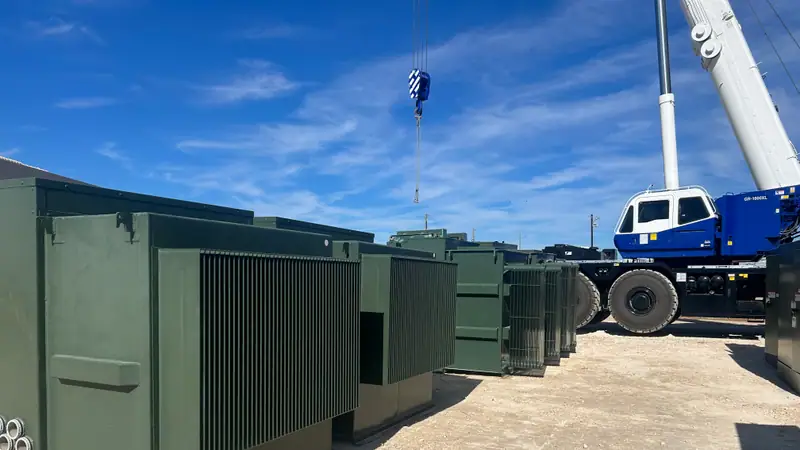
Padmount Transformer Buyers for New York Commercial Sites
We buy three-phase pad-mounted transformers from commercial properties, industrial facilities, development sites and solar projects across New York. These units commonly serve buildings through underground distribution, with the transformer tank and cable compartments enclosed in a ground-level cabinet. We consider one unit or a group being removed during a service upgrade, redevelopment or equipment replacement.
Typical ratings for this category are approximately 75–5,000 kVA, with primary voltages commonly within 4.16–34.5 kV. Common secondary ratings include 208Y/120 and 480Y/277 volts. Those ranges describe equipment we review; use the actual nameplate ratings when submitting your transformer.
A 1,000 kVA transformer and a 2,500 kVA transformer require different handling plans, and their electrical ratings also affect our offer. Send the exact primary and secondary voltages, not just the building’s service voltage. If several units look alike, photograph each nameplate separately so we can identify differences in capacity, connections and age.
Loop Feed, Radial Feed and Cable Compartment Details
Loop-feed and radial-feed construction matter when we evaluate a three-phase padmount transformer. Loop-feed units generally have incoming and outgoing primary connection points that support a distribution loop. Radial-feed units generally have one incoming set of primary connections. Tell us which arrangement you have, or send existing documentation that identifies it.
Dead-front construction uses insulated, shielded primary cable connections. Live-front construction uses exposed primary terminals within the compartment. These designs require different connections and operating practices, so a cabinet’s outside appearance alone is not enough to identify the unit.
Useful configuration details include:
- Loop-feed or radial-feed arrangement.
- Dead-front or live-front primary compartment.
- Bayonet fuses, other fuse arrangements and installed switches.
- Primary connection ratings and secondary terminal layout, if documented.
- Available drawings or connection diagrams.
We also review pad-mounted units from solar installations. If the transformer steps generation voltage up for interconnection, include its winding ratings and intended application; our step-up transformer page explains that category. Do not infer the winding arrangement from the project type alone.
Mineral Oil, FR3 and Condition Information
We buy liquid-filled padmount transformers with mineral oil or FR3/natural ester fluid. Tell us the fluid type shown on the nameplate or fluid label, along with any documented fluid change. FR3 and mineral oil have different properties, and we need to know what is actually in the tank rather than what was originally specified for the site.
For a used unit, describe leaks, corrosion, cabinet damage, missing components and the reason it was removed. For failed equipment, tell us what happened and provide any available test report. We review damaged and scrap units as well as serviceable equipment, but condition and completeness affect the written offer.
Our oil-filled transformer buying page covers the broader liquid-filled category. If PCB status is unknown, say so and send available labels or laboratory records. Age or fluid appearance is not a substitute for documentation. See our PCB testing and label guide, and confirm current testing, handling and disposal requirements with qualified environmental professionals.
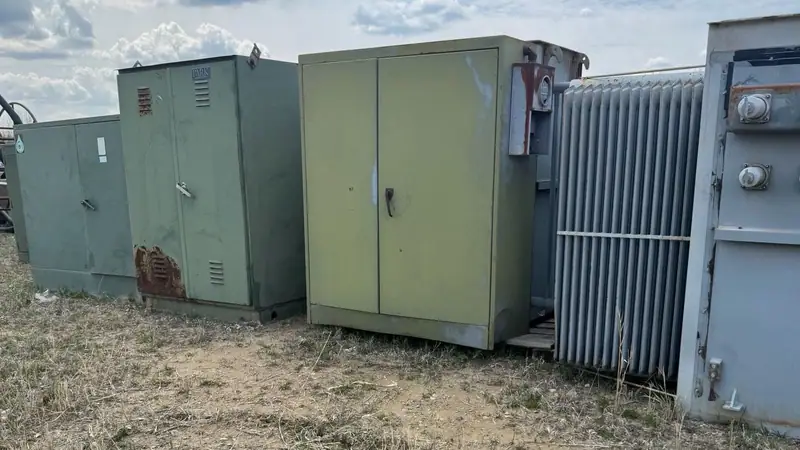
What to Send When You Sell a Padmount Transformer
To sell a padmount transformer, call or text 951-403-5738 with clear nameplate photos and basic site details, or use our online offer form. We review the electrical ratings, age, condition, fluid and PCB information before making a written offer. Include test data if you have it; tell us when records are unavailable.
Start with these details:
- Nameplate photo showing kVA, voltages, serial number and manufacture date, if listed.
- Full exterior photos showing the tank, cabinet, base and visible damage.
- Condition: new in crate, used, removed, failed or scrap.
- Fluid type, PCB records and available electrical or fluid tests.
- Pickup town, number of units and access restrictions.
- Whether the unit is disconnected and who will handle loading.
Our transformer nameplate guide helps identify the ratings we need. For new surplus equipment, include packaging photos and explain whether accessories are present. For multiple units, label the photos by serial number or another clear identifier so we can match each offer item to the correct transformer.
Pickup From Pads, Industrial Parks and Restricted Sites
We coordinate pickup throughout our New York service area, including commercial sites, Long Island industrial parks and solar properties. We have no public storefront or drop-off yard in New York; we come to the seller. Tell us whether the transformer is still on its pad, stored in a yard or sitting on a pallet or skid.
The loading plan depends on the unit’s documented weight, lifting provisions and access. We coordinate rigging, a forklift or crane, and suitable flatbed, step-deck or lowboy trucking, or you can load if you prefer. Use the nameplate or manufacturer’s documentation for weight rather than estimating it from kVA alone.
Send photos of the approach, loading area, gates and nearby obstructions. Mention soft ground, overhead clearance, restricted delivery hours or a pad that a truck cannot reach directly. Utility-owned transformers belong to the utility and cannot be sold by a property owner. Qualified personnel must isolate and disconnect equipment; do not open energized compartments to obtain photos.
Written Offers, Pickup Inspection and Payment
After reviewing your information, we provide a written offer for the identified transformer or group of units. Accurate photos and records help us establish what is included: the complete transformer, its cabinet and installed components, or a damaged unit with missing parts. Tell us about changes in condition or removal plans before pickup is scheduled.
We then agree on pickup arrangements, loading responsibilities and payment terms. Our buying process explains the sequence from submitting information through collection. If your contractor will load the truck, identify the available equipment and site contact so the loading plan is clear before transport arrives.
At pickup, we perform a quick inspection to confirm that the transformer matches the submitted photos and details. We check its identity and visible condition against the agreed description, then payment is made by check, ACH or wire under the agreed terms. For a multi-unit removal, keep the units identifiable and accessible so the inspection and loading follow the written offer.
Questions sellers ask about Padmount Transformers
Who buys used three-phase padmount transformers in New York?
We buy used three-phase, liquid-filled padmount transformers anywhere in New York State. We review units from commercial sites, industrial properties and solar projects, including equipment already removed from service. Send nameplate and exterior photos, the pickup location, condition and fluid information so we can evaluate the unit and provide a written offer.
Can I sell a padmount transformer that failed or leaks oil?
Yes, we review failed, damaged and scrap padmount transformers. Describe the failure, any leaks and missing components, and send available test reports and PCB documentation. We use that information to evaluate the unit and plan handling. Report an active leak before scheduling pickup so it can be addressed in the arrangements.
Do you buy both loop-feed and radial-feed padmount transformers?
Yes, we review both loop-feed and radial-feed units, including dead-front and live-front designs. Send the nameplate and available drawings or safely obtained compartment photos that show the configuration. We also need the kVA, primary and secondary voltages, condition and details of installed switches or fuses to evaluate the complete transformer.
Can I sell the pad-mounted transformer outside my building?
Only if you own it or are authorized to sell it. Many pad-mounted transformers serving buildings belong to the utility, even when located on private property. Confirm ownership through your records or the utility before requesting an offer. If it is customer-owned, send its nameplate, condition information and removal status for review.