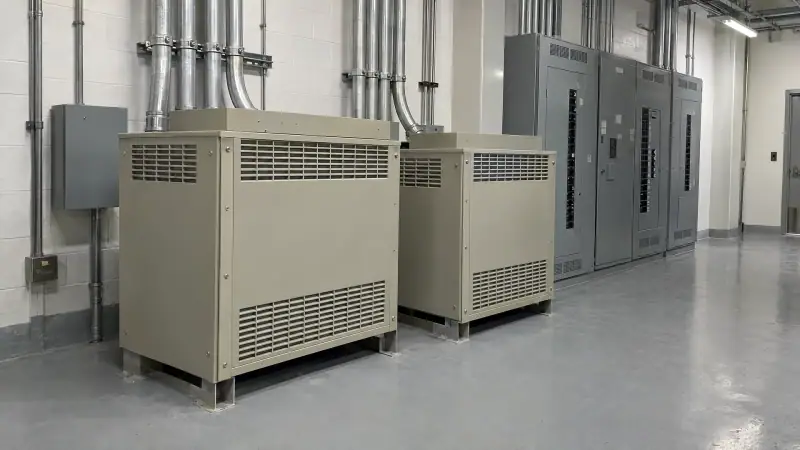
Dry Type Transformer Buyers for Building Power Equipment
We buy low-voltage ventilated dry-type transformers used to supply lighting, receptacles and other building loads. A common configuration is a three-phase unit with a 480 V delta primary and a 208Y/120 V secondary. This page focuses on general-purpose equipment typically ranging from about 15 to 1,000 kVA; we use the actual nameplate ratings when reviewing an offer.
We purchase one transformer or multiple units from a renovation, electrical upgrade, building closure or surplus inventory. New-in-crate equipment, used operating units, removed-from-service transformers and damaged or failed units are all within our buying scope. Tell us which units were operating when disconnected and which have a known problem.
Low-voltage ventilated equipment is different from medium-voltage dry-type transformers and cast-coil transformers. If your equipment has a higher-voltage primary or resin-encapsulated windings, send the nameplate and photos anyway. We can review the correct equipment category rather than relying on a description such as “building transformer.”
Nameplate Details That Make an Offer Useful
The nameplate gives us the electrical information needed to evaluate a dry-type transformer. Photograph it straight on, close enough that the lettering is readable, and include a full view of the enclosure. If a building has several similar transformers, identify each unit separately so ratings and condition notes stay matched.
Please include these details when available:
- Manufacturer, model and serial number.
- Rated kVA, phase and frequency.
- Primary and secondary voltages, winding connections and tap information.
- Enclosure designation, temperature rise and insulation information.
- Efficiency markings, K-rating and manufacturing date.
- Current condition, quantity and pickup location.
Our guide to reading a transformer nameplate explains where to find these ratings. For equipment such as a 75 kVA transformer, the kVA rating alone is not enough: voltage configuration, condition and access also matter. If the plate is missing or unreadable, send clear photos of any remaining labels, purchase documents or drawings. Tell us what is confirmed and what is unknown.
DOE Efficiency, K-Ratings and NEMA Enclosures
Efficiency markings help identify the equipment being offered. Some newer units carry labeling referring to DOE 2016 efficiency requirements. Photograph that wording rather than describing every newer transformer as DOE 2016 equipment. We review the documented rating along with age, voltage configuration and condition; an efficiency designation is not a condition report.
K-rated transformers are designed for loads with harmonic currents, which makes the rating relevant to equipment serving electronic loads in data rooms and similar spaces. Send the actual K-rating shown on the plate. We also buy standard general-purpose units, so a transformer does not need a K-rating for us to review it.
The NEMA enclosure designation helps describe the intended environment and protection provided. Include photos showing doors, covers, ventilation openings, mounting points and any corrosion or impact damage. Keep required covers and hardware with the unit when available.
We review equipment from the transformer brands we buy, including Square D and Schneider Electric transformers. Brand names help identify a unit, but the nameplate and physical condition remain central to our review.
How to Sell a Dry Type Transformer in Any Condition
To sell a dry type transformer, call or text 951-403-5738 or use our online offer form. Send nameplate photos, your location, the number of units and a short description of each unit's condition. Include available test reports and tell us about known faults, repairs or missing parts.
For new surplus equipment, photograph the crate, shipping labels and transformer identification. Tell us if it has remained crated or was opened, installed or energized. For used equipment, describe its last service condition and how it has been stored since removal.
For failed units, useful details include overheating, winding damage, a ground fault, unusual noise or the reason the unit was taken out of service. We also buy scrap units, so report the damage directly rather than trying to establish that a failed transformer is reusable.
As general purpose transformer buyers, we review the complete equipment description before making a written offer. Keep the enclosure and associated transformer parts together where practical, and do not energize questionable equipment to demonstrate its condition.
Removal and Pickup from New York Buildings
Ventilated dry-type transformers do not require insulating-liquid handling, which can simplify removal compared with liquid-filled equipment. Moving one still requires planning around its weight, dimensions, mounting arrangement and the route out of the building. A basement unit, wall-mounted transformer or equipment on an upper floor needs a different access plan from a floor-mounted unit beside a loading door.
Tell us whether the transformer is still connected, already disconnected or staged for pickup. Send photos of stairs, doorways, elevators, loading docks and other access restrictions, especially for New York City transformer pickups. Use the nameplate, manufacturer information or shipping documents for weight rather than estimating from kVA alone.
We coordinate pickup and the required rigging, forklift or crane arrangements, along with suitable trucking. You may load the equipment if you prefer, under the agreed pickup plan. We have no public New York storefront or drop-off yard; we come to the seller.
Have qualified electrical personnel handle disconnection and confirm applicable building requirements. Only offer equipment you own or are authorized to sell; utility-owned transformers belong to the utility.
Written Offers, Pickup Inspection and Payment
After reviewing the photos and details, we provide a written offer for the identified equipment. Our review considers transformer type, kVA, voltages, age, condition and available test information. Ventilated dry-type units ordinarily contain no insulating liquid; if the equipment is liquid-filled or its construction is unclear, tell us so we can review fluid and PCB information where relevant.
Once terms are agreed, we schedule pickup and confirm the loading responsibilities. If several transformers are included, provide a simple inventory tying each nameplate to its photos. Separate notes for operating, failed and new surplus units help us keep the offer and pickup list accurate.
At pickup, we make a quick inspection to confirm that the transformer matches the photos and description. Payment is by check, ACH or wire under the agreed terms. You can review how our transformer buying process works before sending your equipment details.
Include your removal deadline and any building access hours with the initial submission. Those details let us plan around the actual project rather than treating every dry-type transformer as a dock-ready shipment.
Questions sellers ask about Dry-Type Transformers
Who buys used dry-type transformers in New York?
We buy used dry-type transformers anywhere in New York State, including low-voltage general-purpose units from offices, schools and data rooms. We review one unit or multiple units from a project or inventory. Send readable nameplate photos, condition details and the pickup location so we can prepare a written offer.
Can I sell a dry-type transformer that no longer works?
Yes. We buy damaged, failed and scrap dry-type transformers as well as working equipment. Tell us why the unit was removed, what damage is known and whether parts are missing. Send exterior photos and available test reports. Do not energize a damaged transformer just to demonstrate its condition.
Do you buy 480 V to 208Y/120 V transformers?
Yes. We buy low-voltage general-purpose transformers with a 480 V delta primary and 208Y/120 V secondary, a common building-power configuration. Send the actual nameplate because kVA, phase, taps and other ratings vary. We also review other voltage configurations rather than limiting purchases to this common arrangement.
Does a dry-type transformer need DOE 2016 or a K-rating to sell?
No. We review standard general-purpose transformers as well as units with documented efficiency designations or K-ratings. Photograph any relevant markings so we can identify the equipment accurately. Those features are part of our review, alongside voltage, size, age, physical condition and available operating or test information.
Will you pick up a dry-type transformer inside a building?
We coordinate pickup from the seller's location, including planning for rigging and loading when needed. Tell us the transformer’s location within the building, connection status, dimensions and access restrictions. Send photos of the removal route. Disconnection should be handled by qualified electrical personnel before the agreed removal and pickup work.