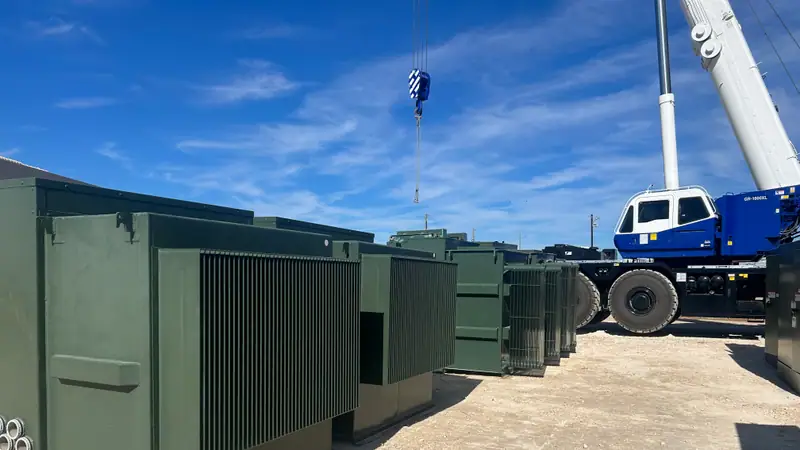
1500 kVA Transformer Buyers for Padmount and Substation Units
At 1500 kVA, the units we review are typically three-phase transformers serving substantial building or industrial loads. We buy enclosed padmount transformers with cable compartments, along with substation transformers connected to switchgear or distribution equipment. We also review 1500 kVA dry-type units installed indoors, where ventilation, enclosure condition and access affect the evaluation.
In New York, this rating commonly appears at manufacturing facilities, warehouses, larger commercial buildings, campuses and multifamily properties. A seller may have a spare still in its crate, a unit removed during an electrical upgrade, or a failed transformer occupying a loading area. We review each of those conditions rather than limiting purchases to operating equipment.
Tell us whether the transformer is freestanding, attached to a lineup or still connected. Include photos of the enclosure, bushings or terminals, cable compartments and any damage, plus a full nameplate image. Only offer equipment you own or are authorized to sell; a utility-owned transformer on your property belongs to the utility.
Full-load amps for a 1500 kVA transformer
| Voltage (line-to-line) | Full-load current |
|---|---|
| 208 V | 4,163.6 A |
| 480 V | 1,804.2 A |
| 600 V | 1,443.4 A |
| 4,160 V | 208.2 A |
| 12,470 V | 69.4 A |
| 13,200 V | 65.6 A |
| 13,800 V | 62.8 A |
| 34,500 V | 25.1 A |
Calculated as kVA × 1,000 ÷ (1.732 × V) for a three-phase unit. Check the nameplate for the actual ratings. Use the kVA to amps calculator.
Common Voltages and 1500 kVA Transformer Full Load Amps
Common primary ratings for 1500 kVA units include 12,470, 13,200 and 13,800 volts; some installations use 34,500 volts. Secondary ratings often include 480Y/277 or 208Y/120 volts, with 600-volt and 4,160-volt designs also encountered. The actual voltage combination, winding connection and available taps matter more to our review than the kVA rating alone.
The page's 1500 kVA transformer full load amps table shows calculated three-phase current at each listed voltage. At 480 V, full-load current is 1804.2 A; at 208 V, it is 4163.6 A; and at 13,800 V, it is 62.8 A. These calculations use the three-phase relationship between kVA, line-to-line voltage and current. They are not instructions for sizing breakers, conductors or protective equipment.
If the nameplate lists both primary and secondary current, photograph those entries too. Our kVA-to-amps calculator helps explain the calculations, but the nameplate remains the reference for the specific transformer. Send the complete plate so we can also read impedance, frequency, cooling class and winding information.
Approximate Weight and Oil Volume Before Pickup
For preliminary planning, many 1500 kVA liquid-filled padmount and substation units weigh roughly 8,000–16,000 pounds complete and contain approximately 300–700 gallons of insulating fluid. These are broad estimates, not lifting specifications. Check the nameplate and manufacturer drawings for the unit's actual weight and fluid quantity; construction, cooling arrangements and accessories can put a transformer outside these ranges.
The weight of a 1500 kVA transformer includes more than its tank and windings. Fluid, radiators, terminal compartments and attached equipment affect the total load and dimensions. Dry-type units have no insulating-oil volume and need their own weight information rather than an estimate borrowed from a liquid-filled design.
Send overall dimensions and photos of the lifting points, base and surrounding access. If the plate is unreadable, tell us what documentation you have instead of estimating a lift load. Our transformer weight guide provides general planning context. Final rigging and truck selection must use confirmed equipment information, not the kVA rating by itself.
What Drives Resale Value for a Used 1500 kVA Transformer
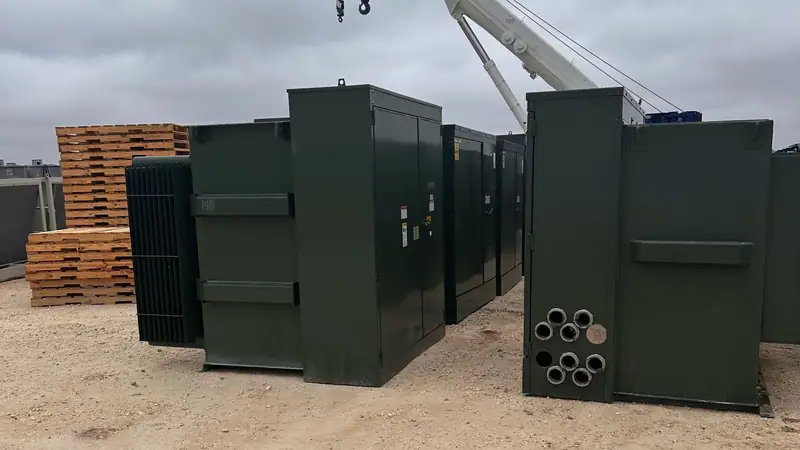
We evaluate a used 1500 kVA transformer by its electrical specifications, condition and potential next use. A common voltage combination, readable nameplate and documented operating history help us assess resale possibilities. An unusual secondary voltage, missing parts or extensive damage may shift the evaluation toward repair or scrap recovery.
The details that help us assess the unit include:
- Electrical configuration: primary and secondary voltages, taps, impedance and winding connections.
- Condition: leaks, corrosion, damaged bushings, missing doors and evidence of overheating.
- Documentation: age, service history and available electrical or fluid test reports.
- Fluid information: mineral oil, natural ester or silicone, plus documented PCB status.
- Completeness: intact terminals, radiators, compartments and other original components.
New-in-crate surplus needs storage details and photos showing that the unit and crate remain intact. For failed units, describe the failure and any work performed afterward. Our guide to what a used transformer is worth explains these evaluation factors. Disclose known PCB information; handling requirements depend on the material and condition, so confirm current applicable rules with qualified professionals.
How We Coordinate Pickup of a 1500 kVA Unit
A transformer this size needs a pickup plan based on its confirmed weight, footprint and location. We coordinate rigging, forklift or crane support and flatbed, step-deck or lowboy trucking as appropriate. If you prefer to load the unit with your own equipment, we can plan around that arrangement.
Tell us whether the transformer sits outside on a pad, inside an electrical room or behind other equipment. Include access-road photos, gate dimensions, overhead obstructions, loading-area conditions and any stairs or restricted clearances. Indoor substation units may require additional planning around nearby switchgear, door openings and the route to the truck.
Equipment must be safely disconnected and ready for the agreed loading scope; do not cut energized cables or attempt an improvised lift. We come to the seller and coordinate pickups across our New York service area, rather than accepting public yard drop-offs. Call or text 951-403-5738 with photos and the site location so we can review the unit and discuss access before scheduling.
Send the Details Needed for a Written Offer
To sell a 1500 kVA transformer, start with a complete nameplate photo and several views of the unit. Include your contact details, town or city, ownership status, whether it is connected or removed, and whether it operated normally before removal. For a failed transformer, describe what happened and identify any known leaks or physical damage.
Useful supporting information includes:
- Manufacturer, serial number and approximate age, if known.
- Primary and secondary voltages, fluid type and documented PCB status.
- Test reports or maintenance records already available.
- Confirmed weight, dimensions and site-loading options.
You can submit these details through our online offer form. We review the specifications and condition, provide a written offer, and agree on pickup responsibilities and payment terms. At pickup, we make a quick inspection to confirm the transformer matches the photos and description. Payment is by check, ACH or wire under the agreed terms. Our buying process explains the sequence from the initial submission through pickup and payment.
Questions sellers ask about 1500 kVA
Who buys used 1500 kVA transformers in New York?
We buy used 1500 kVA transformers throughout New York State, including padmount, substation and dry-type units. We also review new surplus, decommissioned, failed and scrap equipment. Send the nameplate, condition photos and location so we can evaluate the unit and provide a written offer. We coordinate pickup at the seller's site.
How many amps does a 1500 kVA transformer produce at 480 volts?
For a three-phase 1500 kVA transformer, calculated full-load current at 480 volts is 1804.2 A. That is rated current at the stated voltage, not a measurement of the connected load. Check the nameplate for the unit's ratings, and have a qualified electrical professional determine conductor sizing, protection and installation requirements.
How much does a 1500 kVA transformer weigh?
Many liquid-filled 1500 kVA padmount and substation transformers weigh approximately 8,000–16,000 pounds complete, but individual designs can fall outside that range. Check the nameplate and manufacturer drawings for actual weight. Send that information with dimensions and access photos; a general weight estimate is not sufficient for selecting lifting equipment.
Can I sell a failed 1500 kVA transformer that still contains oil?
Yes—we review failed and scrap 1500 kVA transformers, including units that still contain insulating fluid. Tell us the fluid type, documented PCB status, failure details and whether the tank leaks. Do not drain it just to prepare a sale. We need the condition and fluid information to evaluate the unit and plan pickup.