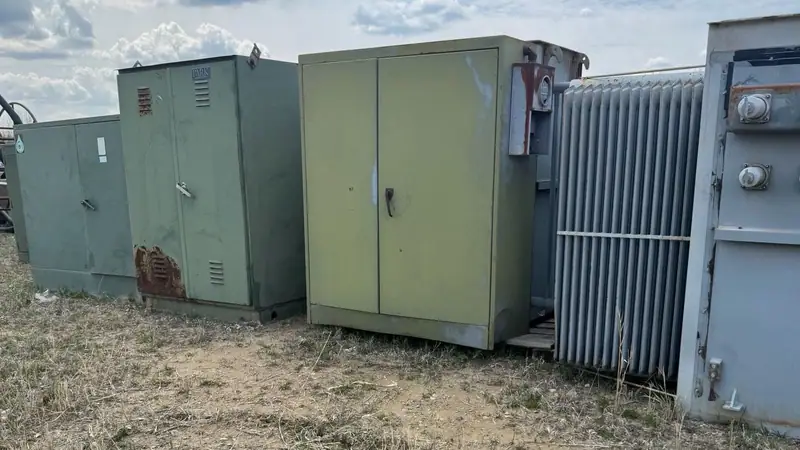
How Much Is a Used Transformer Worth?
We start by deciding whether the transformer has a practical resale use or should be evaluated mainly for its materials. A serviceable unit with usable voltage ratings, documented condition, and a buyer who needs that configuration has a different value basis from a failed unit awaiting removal.
Resale value reflects the complete transformer’s usefulness. We consider its ratings, construction, condition, available test records, and the work needed before another owner can use it. A complete unit with intact bushings, terminals, and accessories gives us more to evaluate than one that has been partially stripped.
Material value depends on recoverable metals, fluid handling, processing, and transportation. Gross weight is not the same as copper weight: the tank, core steel, insulation, and fluid all contribute to the total.
As used transformer buyers, we review resale potential first. For units that are no longer suitable for service, our scrap transformer buying process considers recovery costs along with material content.
Type, kVA, and Voltages Set the Starting Point
A kVA rating tells us capacity, not the whole value. Two transformers with the same rating can serve different applications because of their primary and secondary voltages, phase, winding connections, impedance, cooling arrangement, or enclosure.
Send a legible nameplate photo rather than a description such as “large industrial transformer.” We look for:
- Transformer type, manufacturer, model, and serial number.
- kVA or MVA rating and single-phase or three-phase construction.
- Primary and secondary voltages, connections, and available taps.
- Impedance, cooling designation, and frequency.
- Listed weight, fluid information, and manufacture date, if shown.
A padmount suited to an available distribution application may be easier to place than a specialized unit with unusual ratings. Dry-type, substation, and MVA power transformers each have their own application requirements. Our guide to standard transformer sizes explains capacity categories, but the actual nameplate remains the basis for evaluating your unit.
Age, Condition, and Test Records Affect Resale Value
Age matters, but it is not a condition report. We want to know when the transformer last operated, why it was removed, how it has been stored, and whether it experienced overheating, flooding, a fault, or physical damage. Exterior photos help us identify missing parts, corrosion, leaks, damaged bushings, and access issues.
New-in-crate surplus and used equipment are evaluated differently. Unused equipment still needs matching specifications, complete components, and a credible storage history. For used equipment, recent maintenance and test records help us assess what further inspection or testing may be needed.
Useful records can include insulation resistance, winding resistance, turns-ratio results, and oil test reports where applicable. Send the dates and full reports, not just a statement that the unit “passed.” Our guide to transformer oil testing and DGA explains what those records can reveal. We can review a transformer without test data, but missing records leave more condition questions to resolve.
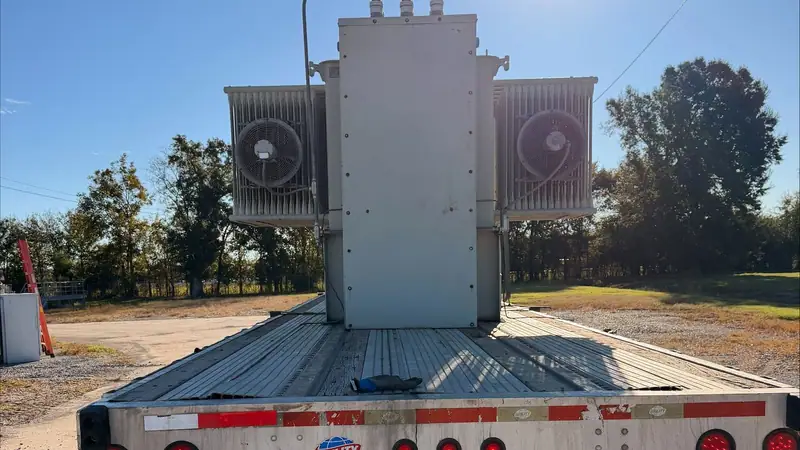
Fluid Type and PCB Status Change the Evaluation
For liquid-filled transformers, tell us whether the fluid is mineral oil, FR3 or another natural ester, or silicone. Include the fluid label, any available laboratory report, and details of leaks or past fluid replacement. Fluid type affects handling and suitability for a future application.
PCB status is a separate issue from the transformer’s operating condition. Send documentation identifying PCB concentration or status, if available. If it is unknown, say so; do not infer it from the transformer’s appearance or a seller’s description.
Fluid testing, containment, and disposal needs can affect the offer and pickup plan. A leak may also require attention before the equipment can be moved. PCB handling and disposal are regulated, so confirm current requirements with the appropriate environmental professionals or authorities. We use the information you provide to evaluate the unit and coordinate the proposed transaction, not to replace a site-specific compliance review.
How Much Does a 1500 kVA Transformer Cost?
A 1500 kVA transformer does not have one standard new or used price. New-equipment pricing depends on voltage ratings, construction, winding material, impedance, cooling, enclosure, accessories, specified performance, and delivery requirements. A liquid-filled padmount and an indoor dry-type unit of that capacity are different purchases.
Used pricing adds condition, age, test documentation, completeness, and availability to those factors. We also consider how closely the unit matches current demand. A transformer available for pickup may interest a buyer facing a long new-equipment lead time, but it still needs to meet that buyer’s electrical and installation requirements.
The same approach applies when asking how much a power transformer is worth: larger capacity alone does not establish value. Specialized voltages, transport requirements, and a narrower pool of suitable applications all matter. For a seller, the practical starting point is a written offer tied to the specific unit—not a generic new-equipment cost or an unrelated asking price.
Pickup Access and Quantity Affect the Net Offer
Location matters because removal and freight are part of the transaction. A transformer staged outdoors with clear loading access requires a different plan from one in a basement vault, behind a narrow doorway, or inside a building with restricted access.
Tell us the pickup address, whether the unit is disconnected, and what equipment is available for loading. Include photos of the route from the transformer to the truck. We coordinate rigging, forklift or crane needs, and flatbed, step-deck, or lowboy transport; you can also load if that is your preference.
For planning, use the listed nameplate weight rather than estimating from capacity. Our transformer weight guide provides context, and our NYC building removal guide addresses access considerations. Quantity matters too: one pickup may cover several units, but we still evaluate each transformer’s specifications and condition. We buy one unit or an entire yard anywhere in New York State.
Get a Written Offer Based on Your Actual Transformer
Call or text 951-403-5738, or request an offer online. Send nameplate photos, pictures of all sides, the pickup location, quantity, condition, fluid and PCB information, and test records if available. Include missing components and known damage so the offer reflects the equipment we will collect.
Confirm that you own the transformer or have authority to sell it. Utility-owned transformers belong to the utility and are not yours to sell merely because they sit on your property. Equipment must be safely disconnected by qualified personnel before removal.
We review the details and provide a written offer. Once terms are agreed, we schedule pickup and coordinate loading and transport. A quick inspection at pickup confirms that the equipment matches the photos; payment is by check, ACH, or wire under the agreed terms. Our buying process explains the steps. We come to the seller and have no public New York storefront or drop-off yard.
Questions sellers ask about What a Used Transformer Is Worth
How much is a transformer worth if it still works?
We assess a working transformer by its ratings, condition, test documentation, completeness, and current resale demand. Operating status is useful, but we also need to know why it was removed and how it has been stored. Send the nameplate and operating history so we can evaluate the specific unit.
How much is a power transformer worth?
We evaluate a power transformer by its MVA rating, voltages, winding connections, condition, accessories, test records, and suitability for another application. Transport and rigging also affect the offer. A larger unit may require specialized hauling, so include its listed weight, dimensions, location, and photos of the loading access.
How much does a 1500 kVA transformer cost new versus used?
New and used costs depend on the particular design, not capacity alone. Voltage ratings, liquid-filled or dry-type construction, accessories, and delivery needs influence new pricing. For used equipment, we also consider service history, testing, damage, missing parts, and demand. A seller’s offer is distinct from a replacement purchase cost.
Is a failed transformer worth anything?
We buy damaged, failed, and scrap transformers, but the offer depends on recoverable materials and the costs of handling, loading, transport, and processing. Fluid and PCB information are important for liquid-filled units. Send photos of the damage and nameplate before stripping parts or arranging removal; completeness affects our evaluation.