Using the kVA to amps calculator
Enter the transformer's rated kVA, select single-phase or three-phase, and enter the voltage for the side you want to evaluate. The calculator returns the rated full-load current for those inputs. For a three-phase transformer, use line-to-line voltage, such as 208 V or 480 V, rather than line-to-neutral voltage.
Choose the primary voltage to calculate primary current, or the secondary voltage to calculate secondary current. A transformer has different current ratings on its two sides because its voltages differ. The lower-voltage side carries more current for the same kVA rating.
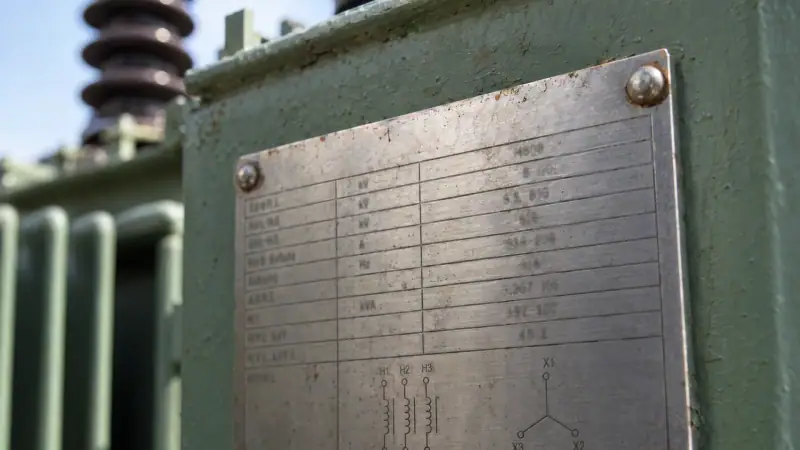
Before entering values, check these nameplate details:
- Rated kVA, including any separate cooling ratings.
- Number of phases.
- Primary and secondary voltages.
- Winding connections and the applicable tap position.
For a nameplate marked 208Y/120 V, enter 208 V when calculating three-phase line current. Our guide to standard transformer sizes helps you compare common ratings, but use your own unit's nameplate as the source for the calculation.
kVA to amps calculator
Three-phase: kVA × 1,000 ÷ (1.732 × V). Single-phase: kVA × 1,000 ÷ V.
Single-phase and three-phase current formulas
The single-phase transformer amps calculation is I = kVA × 1,000 ÷ V. Here, I is current in amperes and V is the voltage across the winding being evaluated. Multiplying kVA by 1,000 converts kilovolt-amperes to volt-amperes.
For three-phase transformers, use I = kVA × 1,000 ÷ (1.732 × V). In this formula, V is line-to-line voltage and I is line current. The factor 1.732 approximates the square root of 3 and accounts for the relationship between phase and line quantities in a balanced three-phase system.
For example, a single-phase 75 kVA transformer at 240 V has a calculated full-load current of 312.5 A: 75 × 1,000 ÷ 240. Do not apply the three-phase formula to that unit simply because it is installed in a facility with three-phase service.
These formulas use apparent power, so there is no power-factor entry when converting a known kVA rating to amps. If you only have load power in kW, you need the load's power factor to determine kVA first.
Worked examples at 480 V and 208 V
The following examples are all three-phase calculations using the stated line-to-line voltage. They show the current on that voltage side of the transformer, not the current on both sides. We use the full-precision square root of 3 for the results, rounded to one decimal place.
| Transformer rating | Line-to-line voltage | Calculation | Full-load line current |
|---|---|---|---|
| 500 kVA | 480 V | 500,000 ÷ (√3 × 480) | 601.4 A |
| 1,000 kVA | 208 V | 1,000,000 ÷ (√3 × 208) | 2,775.7 A |
| 75 kVA | 208 V | 75,000 ÷ (√3 × 208) | 208.2 A |
Using the shortened factor 1.732 instead of the full-precision square root produces a small rounding difference. That explains why a hand calculation may differ slightly from the displayed result.
Notice how voltage changes current. The 1,000 kVA unit at 208 V carries much more current than the 500 kVA unit at 480 V, reflecting both its larger capacity and lower voltage. If a nameplate lists multiple secondary connections, confirm which connection applies before using the result.
What full-load amps mean for equipment sizing
Transformer full load amps describe the current associated with the rated kVA at the stated voltage. They are not a measurement of the load currently connected to the transformer. A lightly loaded unit may draw far less current, while the calculated rating remains unchanged.
Full-load current is a starting point when evaluating conductors, disconnects, overcurrent protection and connected distribution equipment. It is not a complete sizing instruction. Transformer inrush, continuous loads, terminal temperature ratings, conductor installation conditions and applicable code provisions all affect the final design.
Load planning also needs more than one current figure. Motor starting, uneven phase loading and nonlinear loads can matter, particularly when replacing a transformer serving production equipment or a building's distribution system. A balanced three-phase calculation does not show the current on an overloaded individual phase.
Our guide to the 80% rule for transformers explains why a simple percentage is not a universal transformer loading limit. Have a qualified electrical professional confirm equipment sizing and current NEC and local requirements; this calculator is educational, not a design approval.
Nameplate details that help us evaluate your transformer
When you send us a transformer for review, include a clear photo of the complete nameplate rather than only the calculated amps. We review type, kVA, voltages, age, condition, fluid and PCB status, plus test data if available. The original ratings help us understand what the unit is and where it may be usable.
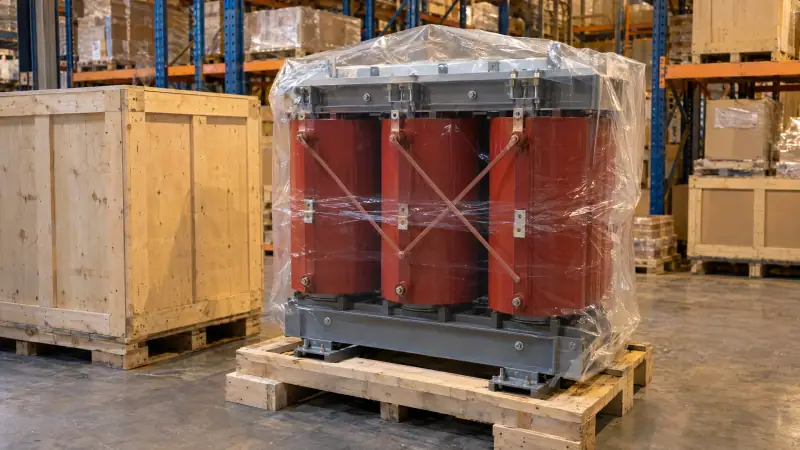
For a dry-type transformer removed during a tenant renovation, photograph the enclosure, terminals and visible winding condition. For an oil-filled padmount removed during a service upgrade, include exterior photos and any available fluid or test records. Note damage, missing parts, leaks and the reason it was taken out of service.
Calculated current does not tell us shipping weight or prove that a transformer operates correctly. Check the nameplate and available manufacturer documentation for weight; our transformer weights by kVA guide provides approximate planning context.
If removal is still being planned, use our transformer decommissioning checklist to organize records and access details. Leave electrical isolation and disconnection to qualified personnel, and confirm current handling requirements for the unit's fluid and PCB status.
Selling a surplus transformer after checking its rating
We buy relevant surplus units from roughly 15 kVA through 20+ MVA, including dry-type building transformers, oil-filled padmounts and larger substation transformers. We review one unit or an entire yard, including new-in-crate, used, decommissioned, damaged and scrap units. A full-load current calculation is useful background, but our offer depends on the transformer details and condition.
Call or text 951-403-5738, or submit nameplate and overall photos through our transformer offer form. Include the location, quantity, removal status and access restrictions. Our buying process covers the review, written offer and pickup arrangements.
We coordinate rigging, forklift or crane needs and flatbed, step-deck or lowboy trucking; you can load if you prefer. Our loading and shipping guide helps you identify access information to send. At pickup, we inspect the unit to confirm it matches the photos, with payment by check, ACH or wire under the agreed terms.
We coordinate pickup across our New York service area, with no public storefront or drop-off yard in the state. Only offer equipment you own or are authorized to sell; utility-owned transformers belong to the utility, not the property owner.
Questions sellers ask about kVA to Amps Calculator
How do I convert transformer kVA to amps?
For single-phase transformers, multiply kVA by 1,000 and divide by the winding voltage. For three-phase transformers, divide kVA times 1,000 by the square root of 3 times the line-to-line voltage. We recommend checking the phase and voltage on the nameplate before entering values in the calculator.
How many amps is a 500 kVA transformer at 480 volts?
A three-phase 500 kVA transformer at 480 V has a calculated full-load line current of approximately 601.4 A. That result uses 480 V as the line-to-line voltage. We would need the primary voltage to calculate primary current; the 601.4 A figure applies only to the stated 480 V side.
Do I use 208 volts or 120 volts for a 208Y/120 transformer?
Use 208 V for the three-phase line-current calculation because it is the line-to-line voltage. The 120 V marking is line-to-neutral voltage. For example, a three-phase 75 kVA unit at 208 V has approximately 208.2 A of full-load line current. We recommend confirming the actual winding connection before calculating.
Can I size a breaker using transformer full-load amps?
Full-load amps are a starting point, not a complete breaker-sizing rule. Inrush, primary versus secondary protection, conductor protection and applicable electrical requirements affect the selection. We provide this calculator for rating comparisons; have a qualified electrical professional determine the protection and confirm current NEC and local requirements.
Will you buy a transformer that has failed or been removed?
Yes. We buy removed-from-service, decommissioned, damaged, failed and scrap electrical transformers throughout New York State, along with used and new surplus units. Send nameplate photos, overall photos, location and a description of the condition. We review those details before providing a written offer and coordinating pickup.