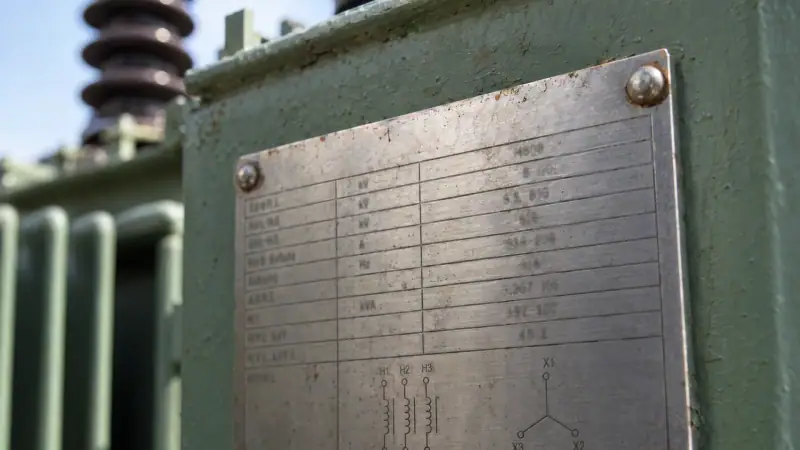
75 kVA Transformer Buyers for Dry-Type and Padmount Units
At this size, we commonly review indoor dry-type transformers serving building loads and outdoor oil-filled padmount units serving smaller facilities or individual services. We buy new units still in their crates, working transformers removed during upgrades, and failed equipment offered for recovery. Tell us which condition applies before sending photos so we can evaluate the unit correctly.
A three-phase 75 kVA transformer and a single-phase 75 kVA transformer have the same apparent-power rating, but different connections, current calculations and potential applications. Send a readable nameplate showing phase, frequency, primary voltage, secondary voltage and winding connections. We also need photos of the enclosure, terminals and any visible damage.
Our pages on dry-type transformers and padmount transformers explain the two common forms in more detail. For an oil-filled unit, include the fluid label and available PCB documentation. For a dry-type unit, tell us about moisture exposure, overheating, missing panels or damaged terminal connections. If the unit has been tested, include the dated results with your submission.
Full-load amps for a 75 kVA transformer
| Voltage (line-to-line) | Full-load current |
|---|---|
| 208 V | 208.2 A |
| 480 V | 90.2 A |
| 600 V | 72.2 A |
| 4,160 V | 10.4 A |
| 12,470 V | 3.5 A |
| 13,200 V | 3.3 A |
| 13,800 V | 3.1 A |
| 34,500 V | 1.3 A |
Calculated as kVA × 1,000 ÷ (1.732 × V) for a three-phase unit. Check the nameplate for the actual ratings. Use the kVA to amps calculator.
Common New York Applications and Voltage Configurations
A 75 kVA dry-type transformer often steps a building's 480 V supply down to 208Y/120 V for lighting, receptacles and smaller equipment loads. We review these units from commercial renovations, warehouse electrical upgrades, apartment-building projects and facility closures across New York. The actual nameplate configuration determines which replacement applications may suit the transformer.
Common details worth photographing include:
- A 480 V primary and 208Y/120 V secondary on a three-phase dry-type unit.
- A 600 V primary on some industrial dry-type configurations.
- A medium-voltage primary, such as 4,160 V, 12,470 V, 13,200 V or 13,800 V, on an oil-filled unit.
- A 208Y/120 V or 480Y/277 V secondary on a three-phase padmount unit.
These are examples, not specifications for every 75 kVA transformer. Photograph tap settings and the connection diagram rather than identifying voltages from nearby switchgear or cables. Our standard transformer sizes guide provides context for the rating, but matching equipment requires the full electrical specifications. Before offering a service transformer, confirm ownership: utility-owned equipment belongs to the utility and cannot be sold by the property owner.
75 kVA Transformer Full-Load Amps: Read the Phase First
The 75 kVA transformer full-load amps table on this page uses three-phase calculations. At 208 V, full-load current is 208.2 A; at 480 V, it is 90.2 A; and at 600 V, it is 72.2 A. Each value describes current at that voltage on a three-phase winding rated for the full 75 kVA.
For three-phase equipment, the calculation is kVA multiplied by 1,000, divided by the square root of three times line-to-line voltage. A single-phase transformer uses a different calculation, so the table should not be applied to a single-phase 75 kVA unit. Our kVA-to-amps calculator helps distinguish the two calculations.
We use the nameplate rating and voltages when reviewing your equipment; a breaker rating or observed operating current is not a substitute. Full-load amps also do not establish conductor sizing, overcurrent protection or installation suitability by themselves. Have the installing electrician confirm the applicable requirements for any reuse. For an offer, clear photos of the rating plate and connection diagram give us the information we need.
Approximate 75 kVA Transformer Weight and Oil Volume
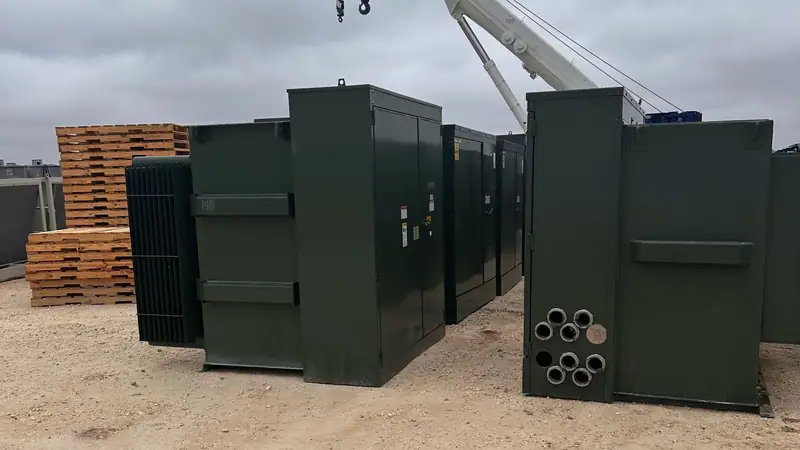
The weight of a 75 kVA transformer depends on its construction, enclosure, winding material and accessories. As broad planning ranges, a conventional enclosed dry-type unit may weigh approximately 400–900 pounds, while an oil-filled padmount unit may weigh approximately 1,000–2,500 pounds. Specialty designs and different phase configurations can fall outside these ranges; check the nameplate and manufacturer documentation for the actual unit.
An oil-filled 75 kVA padmount may contain approximately 70–180 gallons of insulating fluid, depending on the design. Treat that as a rough range, not an inventory measurement. Check the nameplate for fluid type and quantity; if those details are missing, send the manufacturer and model information so the documentation can be reviewed.
Our transformer weight guide explains why kVA alone is not enough for lifting plans. Send photos of lifting provisions, the base and the access route. Tell us if fluid has been drained, if the unit leaks, or if parts are missing. Do not drain fluid merely to prepare the transformer for an offer; handling and disposal requirements should be confirmed before that work.
What Drives a Used 75 kVA Transformer's Resale Value
When you want to sell a 75 kVA transformer, we first establish whether it is a candidate for reuse or should be evaluated as damaged or scrap equipment. A readable nameplate, useful voltage configuration and documented condition help us make that distinction. Age matters, but it is only one part of the review.
For a used 75 kVA transformer, send the removal date, reason for removal and any available test results. Tell us if it was operating when disconnected, stored outdoors, exposed to flooding or removed after a fault. New-in-crate units should be photographed with their labels, packaging and any shipping damage visible.
We also review winding material when documented, enclosure condition, missing components, fluid type and PCB status. Do not describe windings as copper unless the nameplate or supporting records establish that fact. Our guide to what a used transformer is worth explains the main evaluation factors. We account for access and transportation as well: a complete unit beside a loading area requires different pickup planning than one in a basement electrical room.
Send Photos and Arrange Pickup Anywhere in New York
Call or text 951-403-5738, or use our online offer form, with nameplate photos, overall photos and the pickup location. Include the quantity, condition, dimensions if available, and whether the transformer is disconnected and ready to move. For padmount equipment, add fluid and PCB information; for either form, attach available test records.
We review the details and provide a written offer. Once terms are agreed, we schedule pickup and coordinate the needed rigging, forklift or crane, plus suitable trucking. A dry-type unit on an accessible pallet may be handled by forklift, while a padmount unit may require lifting equipment and a flatbed. Stairs, narrow doors, soft ground and overhead restrictions should be identified before scheduling. You can also load the truck if that is your preference and suitable equipment is available.
At pickup, we perform a quick inspection to confirm the transformer matches the photos. Payment is by check, ACH or wire under the agreed terms. Our buying process explains the sequence. We coordinate pickup throughout our New York service area; we do not operate a public storefront or drop-off yard in the state.
Questions sellers ask about 75 kVA
Who buys used 75 kVA transformers in New York?
We buy used 75 kVA dry-type and padmount transformers throughout New York State, including working, removed-from-service, damaged and scrap units. Send nameplate and overall photos, the pickup location and condition details. We review the equipment, provide a written offer and coordinate pickup under the agreed terms.
How many amps is a 75 kVA transformer at 480 volts?
A three-phase 75 kVA transformer has a calculated full-load current of 90.2 A at 480 V. That value applies to the 480 V winding and uses line-to-line voltage. Single-phase equipment requires a different calculation. Check the nameplate for phase and voltage before using the page's three-phase current table.
How much does a 75 kVA transformer weigh?
Broad approximate ranges are 400–900 pounds for a conventional enclosed dry-type unit and 1,000–2,500 pounds for an oil-filled padmount unit. Construction and accessories affect weight, and some designs fall outside those ranges. Check the nameplate or manufacturer documentation before selecting lifting equipment or planning transportation.
Can I sell a failed 75 kVA transformer?
Yes, we review failed and damaged 75 kVA transformers as well as working units. Describe the failure and send photos of damaged areas, the nameplate and the complete enclosure. For oil-filled equipment, include fluid and PCB information. We assess the unit's condition and recovery potential before making a written offer.
Do I need to deliver my 75 kVA transformer to a yard?
No. We coordinate pickup at the seller's location anywhere in New York State and have no public drop-off yard in New York. Send access photos and tell us what loading equipment is available. We can coordinate rigging and trucking, or you can load if preferred and suitable equipment is available.