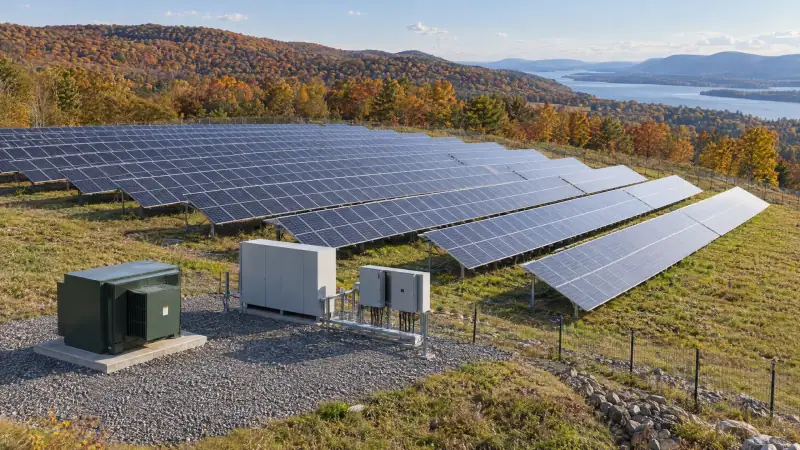
Step Up Transformer Buyers for Solar and Battery Storage
We buy inverter step-up transformer units that connect solar inverters to a project's medium-voltage collection system. That includes padmount transformers from New York community solar developments, including projects developed under NY-Sun. We also review transformers from battery energy storage systems, where equipment specifications reflect the inverter arrangement and charging and discharging operation.
As solar transformer buyers, we need the actual winding ratings—not just the project's total generation capacity. A transformer's kVA, low-voltage rating, high-voltage rating and winding configuration tell us more than the size of the solar array. Low-voltage windings may be rated around 600–690 V, for example, but inverter outputs vary; send the nameplate rather than estimating from the inverter model.
We review single units and groups of matching transformers. If your lot includes different ratings, separate the photos by serial number so we can identify each unit. For equipment labeled 2,500 kVA, our 2,500 kVA transformer page explains the capacity information to include with your inquiry.
Generator Step-Up Units and Multi-Winding Designs
A generator step-up, or GSU transformer, raises generator output voltage for connection to a higher-voltage system. We buy these units from generation sites, along with step-up equipment used in wind projects. Larger GSU units may have different handling requirements from inverter step-up padmounts, so overall dimensions, shipping configuration and site access matter early in our review.
For multi-winding units, send the complete nameplate showing every winding and its rating. Two low-voltage windings serving separate inverter groups are not the same configuration as one low-voltage winding with the same combined capacity. Winding connections, phase displacement and impedance are important identification details.
Useful information includes:
- kVA or MVA rating and cooling stages shown on the plate.
- Voltage and current ratings for each winding.
- Connection diagram, impedance and available tap positions.
- Manufacturer, serial number and manufacturing date.
- Installed accessories and any components removed for transport.
We review MVA-class step-up equipment within our broader power transformer buying program, including units rated 20+ MVA. Use the nameplate ratings rather than the generator's output rating when describing the transformer.
Surplus From Canceled, Redesigned or Repowered Projects
We buy step-up transformers left over when project plans change. A canceled solar installation may leave new units in crates; a redesigned battery storage project may need a different inverter voltage or winding arrangement. Send the original specifications and purchase documentation if available, along with current photos of the equipment.
For new surplus, tell us whether the transformer remains in its original packaging, how it has been stored and whether it was ever installed or energized. Photograph the crate labels, nameplate, exterior and any visible shipping or storage damage. If opening a crate requires equipment or risks damage, send the accessible information first and tell us what remains enclosed.
For used equipment, identify why it was removed and what remains attached. We also buy failed and scrap units, but we need a clear description of leaks, damaged bushings, missing components or known internal faults. Our used transformer buying page covers other removed-from-service equipment that may be included in your project lot.
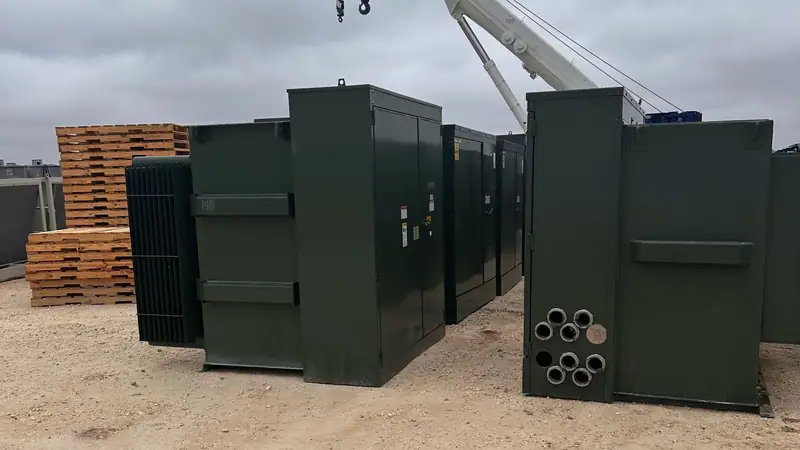
Nameplate, Fluid and Test Details We Need for an Offer
Start with a readable photo of the full nameplate, then add close-ups if small lettering is difficult to read. Our transformer nameplate guide helps you locate the ratings we use to identify a step-up unit. We also need your pickup location, quantity and a brief condition description.
Include these details when available:
- Mineral oil, FR3/natural ester, silicone or another stated fluid type.
- PCB labels and any fluid test documentation.
- Factory test reports and available maintenance or electrical test results.
- Photos of bushings, cable compartments, gauges and exterior damage.
- Dimensions and documented weight, including separate shipping sections.
Fluid type and PCB status are separate pieces of information. Do not infer PCB status solely from the fluid description or appearance; our PCB testing and labels guide explains the records to look for. Confirm current handling and disposal requirements for the unit's documented condition.
Call or text 951-403-5738, or request a written offer with your photos and details. We review the equipment before setting the purchase and pickup terms.
Pickup Planning for Padmounts and Large GSU Transformers
We coordinate pickup at your New York location; we do not have a public storefront or drop-off yard in the state. For a padmount at a solar or storage site, tell us whether it is still installed, disconnected, staged on a concrete pad or accessible from a service road. For a larger GSU transformer, include photos of the loading area and access route.
We schedule pickup and coordinate rigging, forklift or crane needs, and flatbed, step-deck or lowboy trucking as appropriate. You can load the equipment if you prefer. We use documented dimensions and weight to plan handling; rely on the nameplate, drawings or shipping records rather than a visual estimate.
Tell us about soft ground, narrow gates, overhead obstructions and detached radiators or bushings. Energized equipment must be isolated and made safe by qualified personnel before removal; our purchase arrangement is not authorization to disconnect utility equipment.
At pickup, we make a quick inspection to confirm the unit matches the photos and description. Payment is by check, ACH or wire under the agreed terms. Our buying process explains that sequence.
Selling a Project Lot Anywhere in New York State
We buy one step-up transformer or an entire yard of project equipment. For a multi-unit sale, a simple inventory helps us distinguish matching units from transformers with different voltage ratios, winding designs or conditions. Pair each inventory entry with its nameplate photos rather than sending an unlabeled folder.
List the serial number, capacity, voltages, condition and storage location for each transformer. Note which units are crated, which were energized and which are damaged or incomplete. If units are spread across several project sites, identify the quantities at each location so we can discuss pickup arrangements accurately.
Our New York service area covers statewide pickup coordination, including rural solar fields, wind sites and battery storage facilities. Tell us who controls site access and whether a contractor, project owner or facility manager will handle loading coordination.
Confirm ownership before offering equipment for sale. Utility-owned interconnection transformers belong to the utility and cannot be sold by a property owner. We review seller-owned step-up units using the specifications and condition information you provide.
Questions sellers ask about Step-Up Transformers
Who buys inverter step-up transformers in New York?
We buy inverter step-up transformers throughout New York State, including equipment from solar and battery storage projects. Send the nameplate, condition photos, quantity and pickup location. We review the winding ratings, fluid information and available records, then provide a written offer and coordinate pickup under the agreed terms.
Can I sell a new solar transformer from a canceled project?
Yes. We buy new surplus solar step-up transformers, including units still in their original crates. Tell us whether the equipment was installed or energized and how it has been stored. Send crate labels, nameplate information, specifications and accessible condition photos so we can review the actual unit.
Do you buy multi-winding GSU and inverter transformers?
Yes. We review multi-winding step-up transformers as well as conventional generator step-up units. Send the complete nameplate and connection diagram showing each winding's voltage and capacity. Include impedance, cooling ratings and available test reports. Separate low-voltage windings need to be identified individually, not described only by a combined rating.
Will you buy a failed or damaged step-up transformer?
We buy damaged, failed and scrap step-up transformers as well as working units. Describe the known fault and photograph leaks, damaged bushings, missing parts and exterior damage. Include fluid and PCB documentation when available. We use those details to review the unit and discuss appropriate pickup arrangements.
Can I sell the transformer connecting my solar site to the utility?
You can offer a transformer you own and have authority to sell. Utility-owned equipment belongs to the utility, even when it sits on your property or serves your project. Check ownership records before submitting it. For seller-owned equipment, send the nameplate and explain its installation and disconnection status.