Reading Standard Transformer Sizes on the Nameplate
A transformer's size usually means its rated apparent power in kilovolt-amperes, or kVA—not its cabinet dimensions or shipping weight. Larger power transformers are commonly rated in megavolt-amperes, or MVA. One MVA equals 1,000 kVA, so a 2,500 kVA unit and a 2.5 MVA unit have the same nominal capacity.
Start with the nameplate rather than a project drawing or an inventory description. Record the kVA or MVA rating, phase, primary voltage, secondary voltage and manufacturer. A clear photograph also lets us check details such as cooling class, impedance and any listed alternate ratings.
Transformer kVA ratings alone do not identify interchangeable equipment. Two 500 kVA units may have different voltages, connections, cooling systems and installation requirements. Our transformer size pages help organize units by capacity, but we review the complete nameplate before making an offer.
Common Single-Phase and Three-Phase kVA Ratings
The ratings below are common nominal sizes found across distribution and facility transformers. They are not a promise that every manufacturer offers every rating in every construction style. Older equipment, utility specifications and custom orders can use other ratings.
| Phase and capacity group | Common nominal ratings | Forms commonly encountered |
|---|---|---|
| Single-phase, smaller distribution | 10, 15, 25, 37.5, 50, 75, 100 kVA | Pole-mount and single-phase padmount; dry-type at selected ratings |
| Single-phase, larger distribution | 167, 250, 333, 500 kVA | Larger pole-mount, padmount and specialty distribution units |
| Three-phase, smaller facility loads | 15, 30, 45, 75, 112.5, 150, 225, 300 kVA | Dry-type and smaller oil-filled distribution units |
| Three-phase, larger distribution | 500, 750, 1000 kVA | Padmount, dry-type and unit-substation units |
| Three-phase, higher capacity | 1500, 2000, 2500, 3000, 3750, 5000 kVA | Padmount, unit-substation, substation and larger dry-type units |
| Power-transformer classes | MVA ratings, including 5, 10, 15, 20 MVA and above | Substation, power and generation step-up units |
For a three-transformer bank, distinguish each single-phase unit's rating from the total bank capacity. Send a nameplate photo for every unit rather than reporting only the bank total.
Standard padmount transformer sizes vary by phase and specification. We review both single-phase and three-phase padmount transformers, including units outside the most familiar rating sequences. Our usual buying range starts around 15 kVA; the 10 kVA rating appears here because it is a common distribution size.
Standard Transformer Sizes Above 1000 kVA
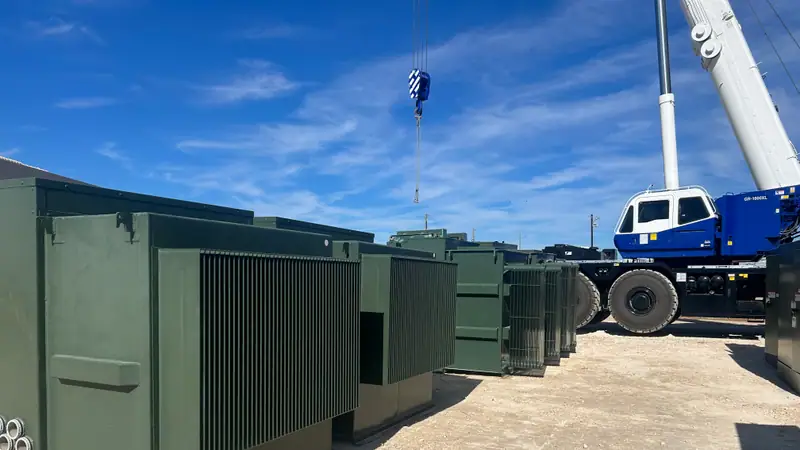
Common standard transformer sizes above 1000 kVA include 1500, 2000, 2500, 3000, 3750 and 5000 kVA. At these capacities, a seller may have a padmount serving a large building, a unit-substation transformer beside switchgear, or a substation unit removed during an upgrade.
The kVA-to-MVA conversion is straightforward: 1500 kVA is 1.5 MVA, 2500 kVA is 2.5 MVA, and 5000 kVA is 5 MVA. Above this range, MVA ratings become more common on nameplates and equipment schedules. We review power transformers around 20 MVA and larger as well as smaller distribution units.
Large units may list more than one rating tied to their cooling configuration. Send the full plate so we can distinguish the base rating from ratings that depend on fans or other cooling provisions. For oil-filled transformers, include the fluid type and any available fluid records.
Capacity is not a shipping weight. Use the manufacturer's stated weight and dimensions for transport planning, and identify whether those figures include fluid and installed accessories.
Why Voltage and Phase Matter as Much as kVA
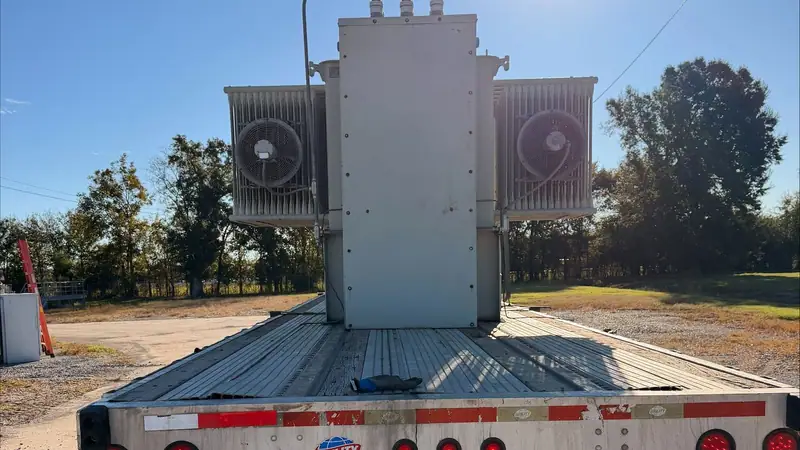
A 75 kVA transformer does not tell us enough to identify its application. A three-phase dry-type unit stepping 480 volts down to 208Y/120 volts differs from a single-phase distribution transformer with a medium-voltage primary, even when both carry the same kVA rating.
For an offer review, send:
- Single-phase or three-phase designation.
- Primary and secondary voltages exactly as shown.
- Connection information, such as delta or grounded wye, if listed.
- Frequency, tap range and impedance from the plate.
- Any special duty or cooling ratings shown.
Current also depends on voltage and phase. Our kVA-to-amps calculator guide explains that relationship; it is not a substitute for checking the actual equipment rating.
Do not reduce a nameplate rating to 80% when describing a unit for sale. Report the stated kVA first. Our guide to the transformer 80% rule explains why loading practices and equipment selection require more context than a blanket percentage.
What to Send for an Offer on Your Transformer
Call or text 951-403-5738, or use our online transformer offer form. Start with a readable nameplate photo, pictures of the complete unit, its location in New York and a short description of its condition. Tell us whether it is new in crate, still installed, removed from service, failed or being sold for scrap.
Include the following details when available:
- Quantity and whether the units have matching specifications.
- Age, service history and reason for removal.
- Fluid type and documented PCB status for fluid-filled equipment.
- Test reports, maintenance records and known damage.
- Whether accessories, radiators, fans or termination compartments are included.
We assess rating together with voltage, construction, condition and the available records. A larger kVA rating alone is not enough to establish an offer. As buyers of used transformers, we also review removed-from-service units with incomplete records; tell us what is known and what is missing.
After reviewing the details, we provide a written offer. You do not need a round-number rating or a currently stocked catalog model to submit a unit.
Planning Pickup for Small Units and MVA Transformers
We coordinate pickup anywhere in New York State for one transformer or an entire yard. We have no public storefront or drop-off yard in New York, so tell us where the equipment sits and how a truck can reach it.
A small dry-type unit and a multi-MVA oil-filled transformer need different handling plans. Send dimensions, the stated weight, loading access and photos showing doors, overhead obstructions or nearby switchgear. We coordinate rigging, forklift or crane handling and flatbed, step-deck or lowboy trucking; you can load the equipment if you prefer.
Use our transformer decommissioning checklist to organize removal details, and our loading and shipping guide to prepare access information. Electrical isolation and removal should be handled by qualified personnel; confirm current environmental requirements for fluid handling and PCB documentation. Utility-owned transformers belong to the utility and are not yours to sell.
At pickup, we perform a quick inspection to confirm the equipment matches the submitted photos and description. Payment is by check, ACH or wire under the agreed terms.
Questions sellers ask about Standard Transformer Sizes
What are the standard single-phase transformer sizes?
Common single-phase ratings include 10, 15, 25, 37.5, 50, 75, 100, 167, 250, 333 and 500 kVA. Availability varies by manufacturer and construction style. We use the actual nameplate to review a unit, including its voltages and condition. Our usual buying range starts around 15 kVA.
What are standard transformer sizes above 1000 kVA?
Common three-phase sizes above 1000 kVA include 1500, 2000, 2500, 3000, 3750 and 5000 kVA. Larger power transformers are often described in MVA, with 1000 kVA equal to 1 MVA. We review the full nameplate because some large units have multiple ratings associated with different cooling configurations.
Are standard padmount transformer sizes the same as dry-type sizes?
Some ratings overlap, but the available size sequences are not identical across all product lines. Three-phase padmount units commonly appear at ratings such as 500, 750, 1000, 1500 and 2500 kVA, while smaller facility dry-types often use ratings such as 30, 45, 75 and 112.5 kVA. We check phase, voltage and construction alongside capacity.
Can I sell a transformer with an unusual kVA rating?
Yes. We review custom, older and less common ratings as well as standard sizes. Send the complete nameplate, overall photos, condition and location so we can assess the unit. If the plate lists several ratings, photograph all of them rather than choosing one. Available test records and fluid information also help our review.