Network Transformer Buyers: Confirm Ownership First
A transformer beneath a building or sidewalk is not necessarily building property. In dense grids such as Manhattan and downtown Brooklyn, many network transformers belong to the utility. Property owners cannot sell utility-owned equipment; the utility or its authorized representative must handle its disposition.
Building-owned spot networks and privately owned vault transformers also come up for sale. We review those units when a facility replaces equipment, changes its electrical distribution or clears a decommissioned installation. Tell us who owns the transformer and who is authorized to approve its sale and removal.
For equipment in New York City, identify the building, the vault location and any restrictions on access. A sidewalk vault may involve different removal arrangements from an indoor electrical room, even when the transformer ratings are similar.
We are an independent buyer, not a utility representative. Before submitting equipment, confirm ownership through your facility records, purchase documents or utility contact. Also tell us if the transformer remains connected or if ownership documentation is still being located.
Vault and Submersible Units We Review
We buy new surplus, used, removed-from-service, decommissioned, damaged and scrap network transformers. One building-owned unit or several units from a spot-network replacement can be submitted together. Our review considers the transformer’s construction, rating, condition and available documentation.
A vault transformer is intended for an enclosed installation, while a submersible design is built for specified exposure to flooding or immersion. Use the manufacturer’s nameplate and documentation to identify the design; location below grade alone is not enough. Tell us about any flooding, corrosion, leaks or repairs.
Network transformers commonly have three-phase secondaries such as 216Y/125 or 480Y/277 volts. Send the actual primary and secondary ratings rather than identifying the equipment only as a building service transformer.
As used transformer buyers, we review serviceable equipment as well as units with known faults. Check our transformer size information if you need help locating the rating, but use the nameplate kVA—not the building load or service amperage—in your submission.
Nameplate Photos, Network Protectors and Test Records
Start with a clear photograph of the complete nameplate. Our guide to reading a transformer nameplate explains the fields we use to identify a unit and review its electrical ratings.
Include these details with the photos:
- Manufacturer, serial number, manufacture date and kVA rating.
- Primary and secondary voltages, phase, frequency and impedance.
- Fluid type, fluid quantity and PCB information, if documented.
- Overall condition, known faults and available test reports.
- Whether the network protector is attached, removed or excluded from the sale.
The network protector is associated protective equipment, not the transformer itself. Photograph its identification plate separately if it remains attached, and explain what is included. Show cable compartments, bushings, cooling surfaces and any visible damage without opening energized compartments.
For a 1,000 kVA transformer or a 2,500 kVA transformer, send the unit’s own dimensions and weight markings. Transformers with the same kVA rating can differ in footprint, lifting arrangements and removal requirements.
Fluid, PCB Status and Flood Damage Details
For oil-filled network and vault transformers, tell us whether the fluid is mineral oil, natural ester or another documented type. Photograph fluid labels and any PCB markings. If you have laboratory results or maintenance records, include those with the equipment photos.
Our PCB testing and label guide explains what information helps with review. Do not describe a unit as non-PCB unless you have supporting documentation. Current handling, transportation and disposal requirements should be confirmed with the appropriate qualified parties; this is general information, not legal advice.
Flood exposure is especially important for below-grade equipment. Tell us when the flooding occurred, whether the unit was energized, and what inspections, drying, repairs or testing followed. We review damaged and failed units, but need the known history to evaluate them accurately.
Also report active leaks, missing fittings, damaged bushings and heavy corrosion. Send photos of those areas along with the full transformer, rather than only close-ups. Do not drain fluid or dismantle the unit just to prepare an offer request.
Planning Removal Through Vaults and Sidewalk Openings
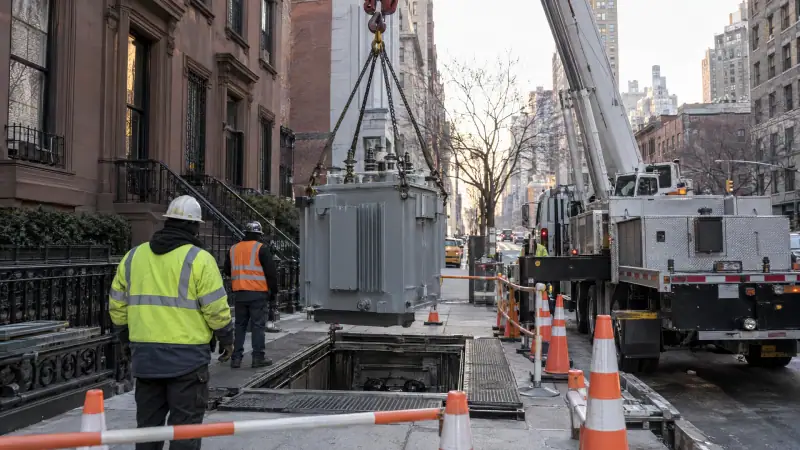
A vault transformer’s removal route matters as much as its rating. Before we schedule pickup, we need to understand how the unit will move from its installed position to the truck. Include photos of the vault, doorway or sidewalk opening and the path between them.
Useful access details include:
- Opening dimensions and the transformer’s overall dimensions.
- Nameplate weight, lifting points and any attached protector enclosure.
- Stairs, elevation changes, tight turns or fixed obstructions.
- Available street access and space for rigging or crane setup.
- Building access hours and any known work restrictions.
An opening that exposes the vault may still be too small for the complete assembly. Tell us if gratings, covers or other components must be removed, and who is arranging that work. Share existing removal plans if your contractor has already assessed the route.
We coordinate rigging, forklift or crane support and suitable trucking under the agreed scope. Electrical isolation and disconnection must be handled by qualified personnel before removal. Confirm current NYC street-use, sidewalk and building requirements with the parties responsible for the work.
Get a Written Offer and Arrange Statewide Pickup
Call or text 951-403-5738, or use our online offer form to send the nameplate photos and basic details. For a vault unit, include ownership, fluid and PCB information, condition, dimensions and access photos in the first submission. That gives us a clearer basis for reviewing both the transformer and its removal.
We review the equipment and provide a written offer. The offer and pickup arrangements should identify what is included, such as an attached network protector, and clarify the agreed loading responsibilities. If you prefer to load the transformer yourself, tell us before transportation is scheduled.
Our buying and pickup process includes coordinating rigging and flatbed, step-deck or lowboy trucking as needed. At pickup, we make a quick inspection to confirm that the equipment matches the photos and description.
Payment is by check, ACH or wire under the agreed terms. We coordinate pickups throughout New York State and have no public storefront or drop-off yard in New York. Keep the unit at the agreed location until removal arrangements are confirmed.
Questions sellers ask about Network Transformers
Who buys building-owned network transformers in New York City?
We buy building-owned network, vault and submersible transformers in New York City and throughout the state. Send nameplate photos, condition details and information about the removal route. Confirm ownership first: a transformer serving your building may belong to the utility, and property owners cannot sell utility-owned equipment.
Do submersible transformer buyers buy flooded or failed units?
We review flooded, damaged and failed submersible transformers as well as serviceable units. Tell us the flood history, whether the equipment was energized, and what testing or repairs followed. Include photos of corrosion, leaks and damaged components. We use that information, the nameplate and fluid documentation to review the unit.
Can you arrange transformer pickup from a sidewalk vault?
We coordinate pickup and the necessary rigging or crane arrangements under the agreed scope. Send opening dimensions, transformer dimensions and weight markings, plus photos of the vault and street access. Qualified personnel must handle electrical isolation and disconnection, and the responsible parties should confirm current requirements for sidewalk or street work.
What information do I need to sell a vault transformer?
Send the complete nameplate, overall photos, known condition, ownership details, fluid type and documented PCB status. Include available test records and state whether a network protector is attached or included. For equipment still in a vault, add access photos, opening dimensions and any existing removal plan so we can review pickup requirements.