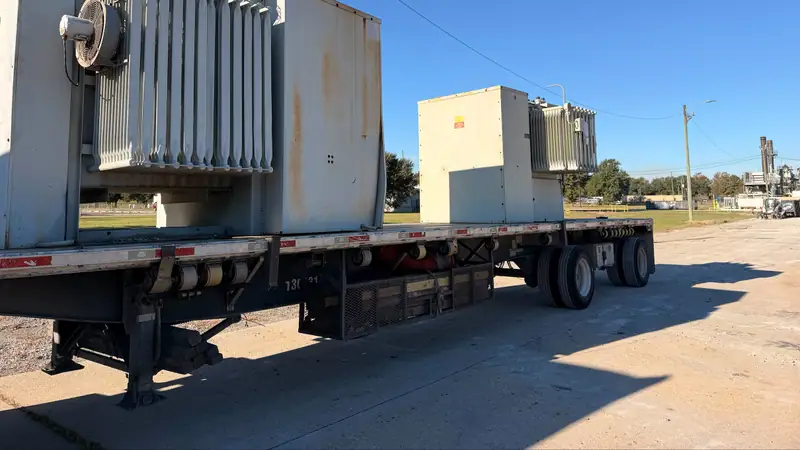
What we need to plan transformer shipping
Before we arrange transportation, we need to identify the transformer and understand where it sits. Send a readable nameplate photo, pictures of all sides and a description of its condition. Include whether it is disconnected, indoors or outdoors, still anchored, or already staged for loading. Tell us about any leaks, damaged bushings or loose components that could affect handling.
The nameplate or manufacturer’s documentation is the starting point for weight. A kVA rating alone is not enough to select lifting equipment or a truck: enclosure design, fluid volume and accessories affect the load. Our guide to transformer weights by kVA explains why estimated weights are only planning references.
Useful shipping details include:
- Total weight, including fluid and attached accessories.
- Overall length, width and height, including radiators and bushings.
- Photos of lifting lugs, the base and any fork pockets.
- Distance from the transformer to the truck’s loading position.
- Available forklift or crane information and site access restrictions.
Send this information through our offer form, or call or text 951-403-5738. We review the unit and provide a written offer before scheduling pickup.
Choosing a forklift or crane for transformer rigging
A forklift may suit a smaller transformer with manufacturer-approved fork pockets or a base designed for fork handling. Its rated capacity must be sufficient at the actual load center and lift height—not just the capacity printed on the machine. Fork length, ground conditions and the transformer’s center of gravity also matter. We use those details when coordinating the loading method.
A crane may be needed for heavier units, transformers behind barriers or locations where a forklift cannot approach safely. For crane lifting, use only the manufacturer-designated lifting lugs or lifting points, with rigging arranged according to the manufacturer’s instructions. Qualified rigging personnel should select the lifting equipment and verify the lift plan.
Never lift a transformer by its radiators, bushings, cable compartments, conduit or other attachments. Do not assume that every eye or bracket is a lifting point for the complete assembly; some are intended only for a cover or separate component.
Tell us if you already have loading equipment and an operator available. You can load the truck if you prefer, or we can coordinate forklift or crane arrangements as part of pickup planning.
Cribbing, securement and weather protection
The transformer needs stable support before loading and throughout transport. Suitable blocking or cribbing supports the structural base, keeps the unit level and provides clearance where needed. It should not bear against drain valves, cooling fins or unsupported cabinet edges. The loading crew should check the support arrangement before releasing the lifting equipment.
Transport securement must keep the unit from sliding or tipping. The carrier should select tie-downs, blocking and attachment locations appropriate to the weight and design. Chains and straps should not run across fragile bushings, radiators or exposed electrical connections. Lifting lugs are not necessarily rated as transport tie-down points.
We plan for oil-filled transformers to travel upright. Report fluid leaks before pickup so containment and handling needs can be reviewed. Do not drain a transformer simply to reduce shipping weight without first discussing the unit’s condition and the handling plan.
Dry-type transformers need protection from rain, road spray and snow. Secure weather protection without trapping standing water or stressing the enclosure. New-in-crate units should remain in suitable original packaging when practical. Share fluid and PCB records if available; our oil testing and DGA guide explains common test information.
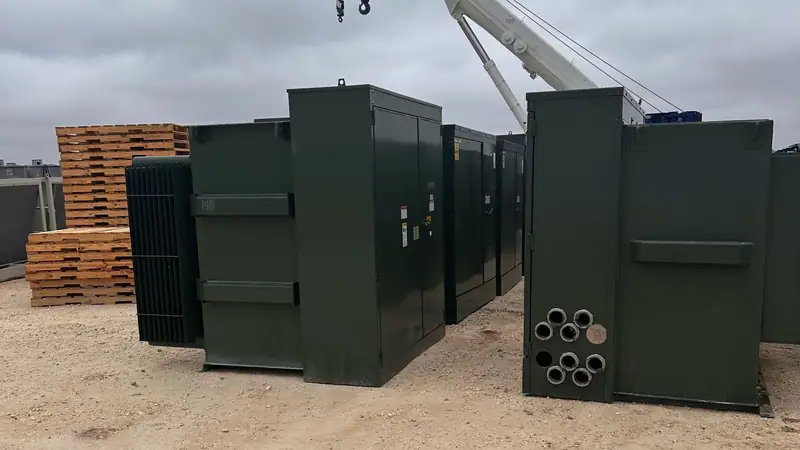
Selecting a flatbed, step-deck or lowboy
We coordinate flatbed, step-deck or lowboy trucking according to the transformer’s dimensions, weight and loading arrangement. A flatbed provides open access for overhead or side loading. A step-deck offers a lower deck area for taller cargo. A lowboy may suit a heavier or taller unit when deck height and transport clearance are important.
Truck selection also depends on the site. A trailer that works on the highway may not fit through a narrow gate or turn into a crowded equipment yard. Send photos showing the entrance, turning area, overhead obstructions and intended loading position. Include any restrictions on trailer length or truck movement.
Before scheduling, we establish:
- Who provides the lifting equipment and who loads the trailer.
- Where the truck can park safely during loading.
- Whether the unit’s shipping dimensions require carrier review for permits or routing.
- Which loose accessories are included and how they will be secured.
Our selling and pickup process includes a quick inspection at pickup to confirm that the transformer matches the photos and agreed details. Payment is by check, ACH or wire under the agreed terms.
NYC curb access and building loading constraints
In New York City, the loading position can shape the entire pickup plan. A transformer inside a basement or electrical room may need to pass through doors, corridors or a freight elevator before reaching the truck. We need that route described before arranging transportation; a curbside truck alone does not solve an indoor removal problem.
Measure the narrowest openings and identify stairs, ramps, elevator limits and overhead restrictions. Tell us about building work hours, dock reservations and property-management requirements. Our guide to removing a transformer from a NYC building covers information to gather before removal and loading.
For curb loading, establish where the truck and lifting equipment can stand and how pedestrian access will be managed. Confirm current NYC requirements for street occupancy, parking restrictions and crane activity with the appropriate parties before scheduling.
We coordinate pickups in New York City, but we do not have a public storefront or drop-off yard there. Have qualified personnel isolate, disconnect and verify the transformer safe before handling; we plan pickup around its readiness for removal.
Upstate access, winter conditions and pickup readiness
For rural and upstate sites, describe the access road as carefully as the transformer. Gravel lanes, soft shoulders, small bridges and tight turns can limit a loaded truck. Tell us about posted restrictions, gates, steep grades and whether there is a firm, level area for loading. Photos of the route help us coordinate pickups across our New York State service area.
Winter adds practical constraints. Snow can conceal uneven ground and lifting points, while ice reduces traction for trucks and forklifts. Clear the loading route and staging area, and tell us if plowed snowbanks narrow the entrance. The carrier and lifting crew need conditions suitable for their equipment.
Before the scheduled pickup, confirm that the transformer is accessible, included accessories are identified and the site contact can meet the truck. If weather, access or disconnection work changes, let us know before equipment is dispatched.
We buy used, decommissioned, damaged and scrap transformers as well as new surplus units. Condition affects our review, but even a failed transformer needs a loading plan based on its actual weight, structural condition and fluid status.
Questions sellers ask about Loading & Shipping
How do I ship a transformer in New York?
Start with nameplate photos, actual shipping dimensions, weight information and pictures of the loading route. When you sell to us, we review the transformer, provide a written offer and coordinate pickup with suitable lifting equipment and trucking. Tell us before scheduling if the unit is still connected, anchored or inside a building.
Can a forklift load a transformer onto a truck?
A forklift can load a transformer when the unit has suitable manufacturer-approved fork handling provisions and the forklift has adequate capacity for the actual load center and lift height. Ground conditions and fork length also matter. Send photos of the base and forklift details so we can review the proposed loading arrangement.
Can an oil-filled transformer be shipped on its side?
We plan oil-filled transformer shipments upright. Tilting a unit can affect fluid containment and internal components, and its fittings may not be designed to support it in another orientation. Send the upright height, including bushings and accessories, so the carrier can assess deck height and route clearance. Follow the manufacturer’s transport instructions.
Who arranges transformer rigging and trucking when I sell?
We coordinate rigging, forklift or crane arrangements and flatbed, step-deck or lowboy trucking based on the site and transformer. If you prefer to load with your own equipment, tell us during the offer review. We establish the loading responsibilities and access details before scheduling so the pickup plan matches the site.
Can I sell the utility transformer on my property?
A utility-owned transformer belongs to the utility, even when it sits on your property. Property owners cannot sell it. Confirm ownership before requesting an offer or arranging removal. For a transformer you own, send the nameplate, condition details and site photos so we can review the unit and its pickup requirements.