Transformer Buyers in Manhattan, NY: Equipment We Buy
We buy one transformer or a group of units, including new equipment still in its crate and transformers removed during building electrical work. For Manhattan sellers, relevant equipment includes low- and medium-voltage dry-type units, cast-coil transformers, oil-filled units, network/vault equipment, padmounts and unit substations. Our overall buying range is roughly 15 kVA through 20+ MVA; send the actual nameplate rating rather than estimating from cabinet size.
Building electrical rooms may contain dry-type transformers, while vault installations require a closer look at enclosure design, fluid and access. We also review privately owned network and vault transformers, including removed-from-service and damaged units. A failed transformer is still worth submitting, but describe the failure and any missing parts clearly.
To sell a padmount transformer in Manhattan, send photos of the cabinet, nameplate, termination compartments if safely accessible, and the surrounding loading area. Confirm ownership first: Con Edison-owned transformers belong to the utility and cannot be sold by a property owner. We are not affiliated with Con Edison.
What we buy in Manhattan
New surplus, used, decommissioned and failed units, from about 15 kVA to 20 MVA and up. One transformer or a whole yard.
Where Manhattan Surplus and Used Transformers Come From
Manhattan's Financial District and Midtown are its two central business districts. We work with sellers responsible for privately owned transformer equipment in office properties, commercial buildings and mixed-use facilities. Building owners and contractors can submit units made surplus by electrical distribution changes, equipment replacement or the cancellation of an installation.
In mixed-use SoHo, or properties in Chelsea and the Upper East Side, a transformer sale may need to fit around occupied space and shared building access. Tell us whether the equipment remains in an electrical room, has reached a loading dock, or is stored off-site. Those are different pickup situations, even when the nameplates match.
Redevelopment, tenant reconfiguration and electrification work can change a building's electrical requirements and leave an existing transformer available for sale. We do not need a particular project history to review it, but we do need to know why it was removed and whether it was operating beforehand. For unused replacement stock, include crate photos and any available purchase or factory test documentation.
What Affects Your Manhattan Transformer Offer
We review transformer type, kVA or MVA rating, primary and secondary voltages, age, condition and available test results. Clear nameplate information lets us identify the unit's configuration instead of relying on an exterior photograph. For oil-filled equipment, tell us the fluid type and send any PCB labels or laboratory results you have.
The most useful details include:
- Manufacturer, model, serial number and readable nameplate photos.
- Operating history, removal date and the reason for replacement.
- Known winding damage, leaks, corrosion or missing components.
- Test reports, service records and accessories included in the sale.
- Current location, loading access and whether removal is complete.
An intact unit with documented operating history is evaluated differently from a stripped or failed transformer. Handling also matters: a unit already staged for loading requires different coordination from one behind a narrow basement doorway. We explain the equipment and pickup scope in the written offer.
For older fluid-filled units, our PCB testing and label guide explains useful documentation. Confirm current handling requirements with the appropriate professionals before arranging removal or transport.
Manhattan Pickup: Basements, Loading Docks and Street Access
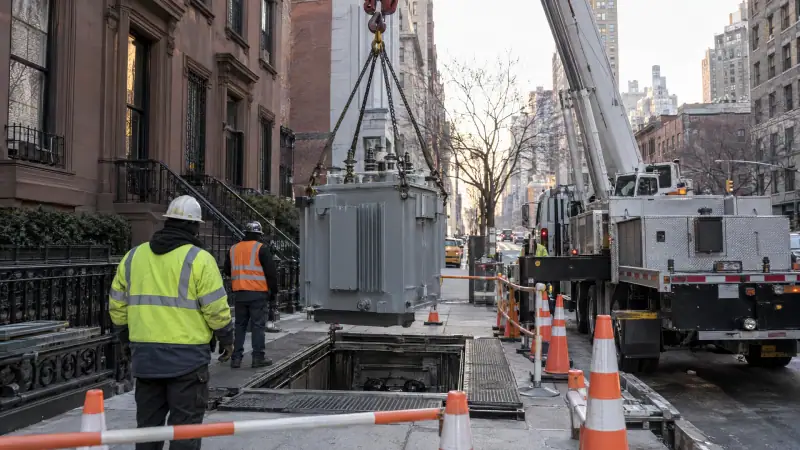
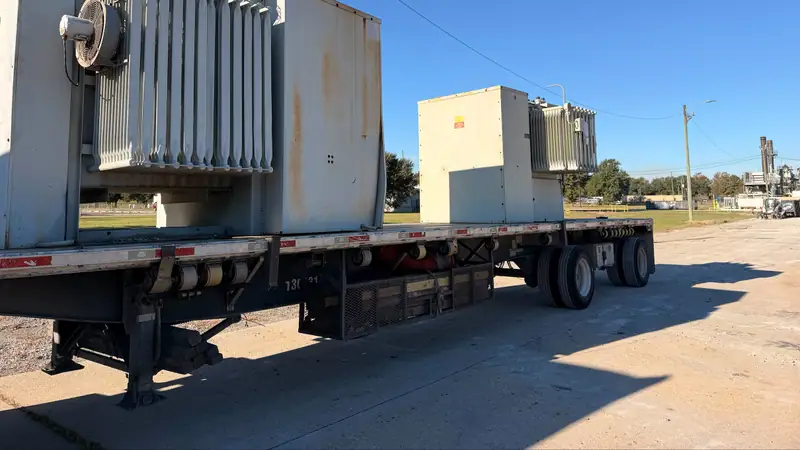
Manhattan Island sits between the Hudson, East and Harlem rivers, so truck access depends on both the approach to the borough and the final loading location. We coordinate rigging, forklift or crane needs and flatbed, step-deck or lowboy trucking around the unit and site. We have no public storefront or drop-off yard in New York; we come to the seller.
For a basement or interior electrical room, send doorway dimensions, corridor turns, elevator information and photos of the complete route to the truck. Include stairs, thresholds, overhead restrictions and any point where the transformer must change direction. Use documented equipment weight or nameplate information rather than guessing what a freight elevator or floor can support.
Street-side loading in Lower Manhattan or Midtown needs a different plan from a clear private loading dock. Tell us about dock reservations, building work hours, curb access and truck restrictions. Confirm current NYC permit, street-use and traffic requirements with the building and responsible contractors; qualified personnel must disconnect equipment before removal. Our NYC building removal guide helps you gather access details before pickup scheduling.
Get a Written Offer and Arrange Your Pickup
Start by calling or texting 951-403-5738, or use our transformer offer form. Send the Manhattan pickup address, your contact information, the number of units and readable nameplate images. Our guide to transformer photos to send helps you capture the equipment and its surroundings in a useful first submission.
We follow these steps:
- Review the equipment. We check type, capacity, voltages, age, condition, fluid and PCB status, plus test data when available.
- Provide a written offer. We set out the purchase terms and discuss the removal and loading scope.
- Schedule pickup. We coordinate the needed rigging and truck, or arrange for your crew to load if that is your preference.
- Confirm the unit at pickup. We perform a quick inspection to verify that it matches the photos and description.
- Pay under the agreed terms. Payment is by check, ACH or wire.
If the transformer is still connected, tell us the planned shutdown and removal status when you submit it. Separating those steps from truck scheduling helps us plan around your contractor's work and the building's access window.
Nearby Boroughs and Communities We Also Serve
We coordinate purchases beyond Manhattan when equipment from the same project is stored at multiple locations. Nearby service areas include Brooklyn transformer sellers, roughly five miles away, and Queens transformer sellers, roughly nine miles away. These are approximate nearby-place distances, not truck-route mileage or travel-time estimates.
We also buy from sellers in The Bronx, approximately eleven miles from Manhattan, and Yonkers, approximately seventeen miles away. Staten Island and Mount Vernon are additional nearby service areas. Our pickup coordination extends throughout New York State, so the equipment does not need to stay in Manhattan for us to review it.
Tell us where each transformer physically sits, not just where your office or original project is located. If a Manhattan building's removed units are now in a contractor's storage yard in another borough, send that yard's access photos. For a multi-location sale, group the nameplates and condition notes by pickup address so we can define the loading requirements for each stop.
Questions sellers ask about Manhattan, NY
Who buys used transformers in Manhattan, NY?
We buy privately owned used electrical transformers throughout Manhattan, including dry-type, oil-filled, padmount and network/vault units. We review operating equipment, removed-from-service units and failed transformers. Send readable nameplate photos, condition details and the pickup location so we can evaluate the equipment and provide a written offer.
Can I sell a transformer from a Manhattan building basement?
Yes, we review privately owned transformers located in basements and interior electrical rooms. Send photos and dimensions of the removal route, including doors, turns, stairs and any freight elevator. Tell us whether the unit is disconnected. We discuss rigging and loading needs before scheduling pickup.
Can I sell the Con Edison transformer at my property?
A Con Edison-owned transformer belongs to the utility, even when it is located at your property, and you cannot sell it as your own equipment. Confirm ownership through your building records and the utility before submitting it. We review privately owned units and are not affiliated with Con Edison.
Do you buy damaged or scrap transformers in Manhattan?
Yes, we review damaged, failed, decommissioned and scrap transformers, as well as surplus and usable equipment. Describe the damage, leaks and missing parts, and include fluid and PCB documentation if available. We also need access information because a scrap unit inside a building still requires a defined removal and loading plan.