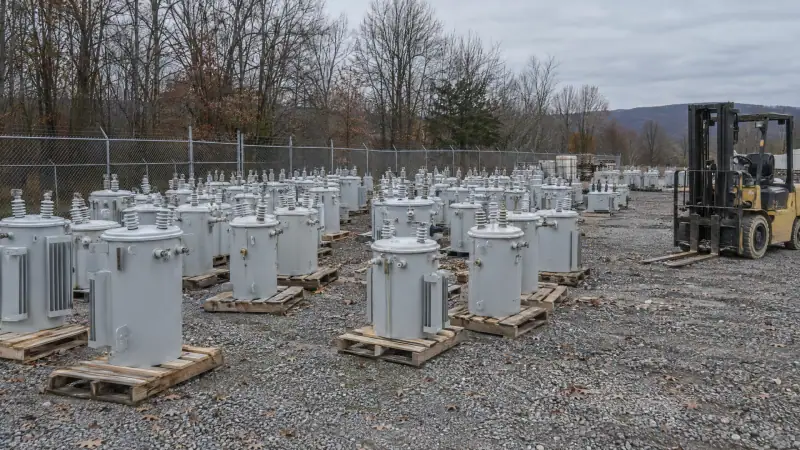
Do scrap yards take transformers with oil still inside?
Some yards accept intact oil-filled transformers under their own handling procedures; others accept only drained units or decline them altogether. Dry-type transformers have no insulating liquid to remove, but a yard may still have requirements for condition, size, access, and ownership documentation. Calling ahead prevents a rejected load and an unnecessary return trip.
A scrap yard evaluates a transformer mainly as a source of recoverable metal. Its acceptance rules also account for liquid handling, contamination concerns, and the equipment needed to unload it. Even a drained transformer can retain oil in its internal materials, so “drained” and “ready for unrestricted scrap handling” are not the same thing.
When we review oil-filled transformers, we ask about the fluid, PCB status, condition, and available records before arranging pickup. Send photos of the complete unit and its nameplate rather than preparing it for a scrap yard first. That lets us evaluate the transformer in its current condition and identify what handling needs to be addressed.
What to ask a scrap yard before loading a transformer
Ask about the exact transformer you have, not just whether the yard takes copper or electrical scrap. Describe it as dry-type or liquid-filled, provide its approximate dimensions, and explain whether it is intact, damaged, or leaking. Share the nameplate information and any fluid records you have.
Use these questions to establish the yard’s requirements:
- Do you accept this transformer intact, or must it be drained first?
- What documentation do you require for non-PCB status?
- Do you accept units containing mineral oil, natural ester, or silicone fluid?
- Who is responsible for draining, fluid removal, and any required testing?
- Can you unload this unit, and what weight information do you need?
- Are there preparation requirements or handling charges?
- What paperwork establishes that we own and can sell the transformer?
Get those requirements before arranging transport. If the unit is still installed, our transformer decommissioning checklist helps organize the information needed before removal. Do not assume a yard’s acceptance of a small dry-type unit means it will accept a large liquid-filled transformer.
How to scrap a transformer without mishandling the oil
The first step in how to scrap a transformer is confirming that you own it and that it has been safely disconnected. A qualified electrical professional should handle isolation and verification before removal. Property owners cannot sell utility-owned transformers simply because the equipment sits on their property.
For an oil-filled unit, establish the receiving facility’s fluid and PCB documentation requirements before anyone opens a drain valve. Draining requires suitable containment, compatible containers, spill controls, and an appropriate destination for the removed fluid. Do not pour transformer oil onto the ground, into a drain, or into a mixed waste container.
A fluid label, service history, and available laboratory reports help establish what is inside. Age alone is not proof of non-PCB status; missing records may require further review or testing. Confirm current EPA, New York State, and local requirements with a qualified environmental professional or the receiving facility.
We review units in their existing condition, so contact us before stripping components or draining fluid. Keep labels and records with the equipment, and use our ownership and paperwork guide to prepare the documents supporting the sale.
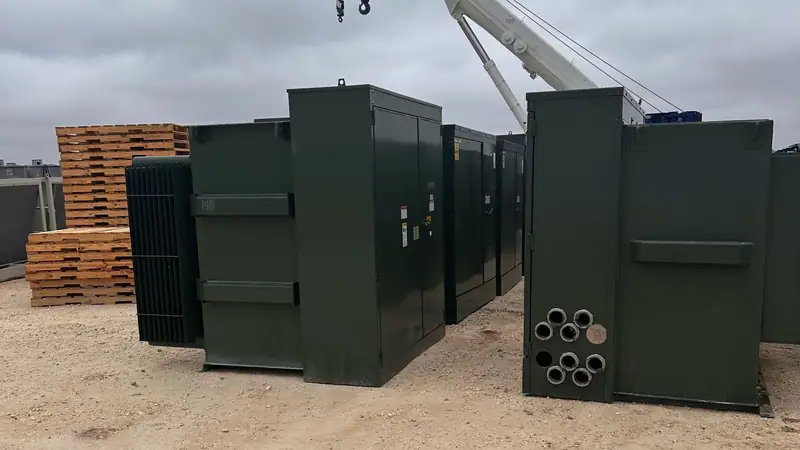
Check equipment value before choosing scrap disposal
A transformer that no longer fits your project may still have reuse value. New surplus units, working takeouts, and documented used transformers deserve an equipment review before being treated solely as scrap. Reusable equipment may bring a stronger offer than its recoverable metal, although the result depends on the individual unit.
We consider the transformer’s type, kVA or MVA rating, primary and secondary voltages, age, condition, fluid, PCB status, and test data when available. Clear nameplate photos matter more than a guess about how much copper is inside. Windings may be copper or aluminum, and the complete unit’s weight includes steel, insulation, enclosures, and sometimes substantial fluid.
Keep the transformer intact while we review it. Removing bushings, cutting leads, or dismantling the assembly can reduce reuse options and create additional handling work. Our guide to what a used transformer is worth explains the main evaluation factors. We also review failed and damaged units as scrap transformer buyers, so a known fault is something to disclose, not a reason to skip the inquiry.
Plan removal and trucking before choosing a destination
Acceptance is only part of how to dispose of electrical transformers. The unit also needs a safe route out of its current location and a loading plan matched to its size, condition, and lifting provisions. A transformer in a basement vault requires different planning from a padmount beside an accessible driveway.
Send photos showing the transformer, the surrounding work area, access gates, loading space, and any visible damage. Include nameplate weight information if available; otherwise, tell us that the weight is unknown. Do not choose lifting equipment based on appearance or a rough size comparison.
We coordinate rigging, forklift or crane needs, and flatbed, step-deck, or lowboy trucking as appropriate. Sellers can load if they prefer, under the agreed pickup plan. Our loading and shipping guide covers the details to gather before scheduling.
For indoor equipment, explain door dimensions, stairs, freight elevator access, and street-loading restrictions early. Our NYC building removal guide addresses those access questions. We have no public storefront or drop-off yard in New York; we come to the seller.
Get a written offer before preparing the unit for scrap
Call or text 951-403-5738 with nameplate photos and basic details, or submit our online offer form. Tell us the pickup location, how many units you have, whether they are still installed, and whether there are leaks or known failures. Include fluid and PCB records and test reports if available; tell us plainly when records are missing.
We review the equipment and provide a written offer. If you accept, we schedule pickup and coordinate the loading and transportation plan. At pickup, we perform a quick inspection to confirm that the transformer matches the photos and description. Payment is by check, ACH, or wire under the agreed terms.
We buy one transformer or an entire yard throughout New York State, including new-in-crate surplus, used, removed-from-service, damaged, and scrap units. For this decision, the useful comparison is an equipment offer against the scrap yard’s acceptance requirements, preparation work, and transportation arrangements.
Before spending money on draining or dismantling, ask us to review the complete unit. We can evaluate what you have without requiring you to turn a potentially reusable transformer into a pile of separated material first.
Questions sellers ask about Do Scrap Yards Take Them?
Can I take an oil-filled transformer to a scrap yard?
Possibly, but call the yard before loading it. Some accept intact oil-filled units, while many require draining and documentation of non-PCB status or refuse them entirely. Ask who handles the fluid and what records are required. We review oil-filled transformers in their current condition before arranging pickup.
Do I need to drain a transformer before selling it?
Not necessarily. A scrap yard may require draining, but contact us before removing fluid from a transformer you want to sell. We review its condition, fluid information, and PCB records first. Any draining must use proper containment and an appropriate fluid disposal destination; it is not ordinary scrap preparation.
Is a working transformer worth more than scrap?
A reusable transformer may have more value as equipment than as recovered metal. We evaluate its rating, voltages, age, condition, fluid, PCB status, and available test data. Keep it intact and send nameplate photos before dismantling it. We provide a written offer so you can compare your options.
How do I dispose of a transformer with unknown PCB status?
Start by gathering the nameplate, fluid labels, service records, and any laboratory reports. Tell the prospective buyer or receiving facility that PCB status is unknown. Further review or testing may be needed before acceptance or handling. Confirm current requirements with a qualified environmental professional rather than relying on the transformer’s age.